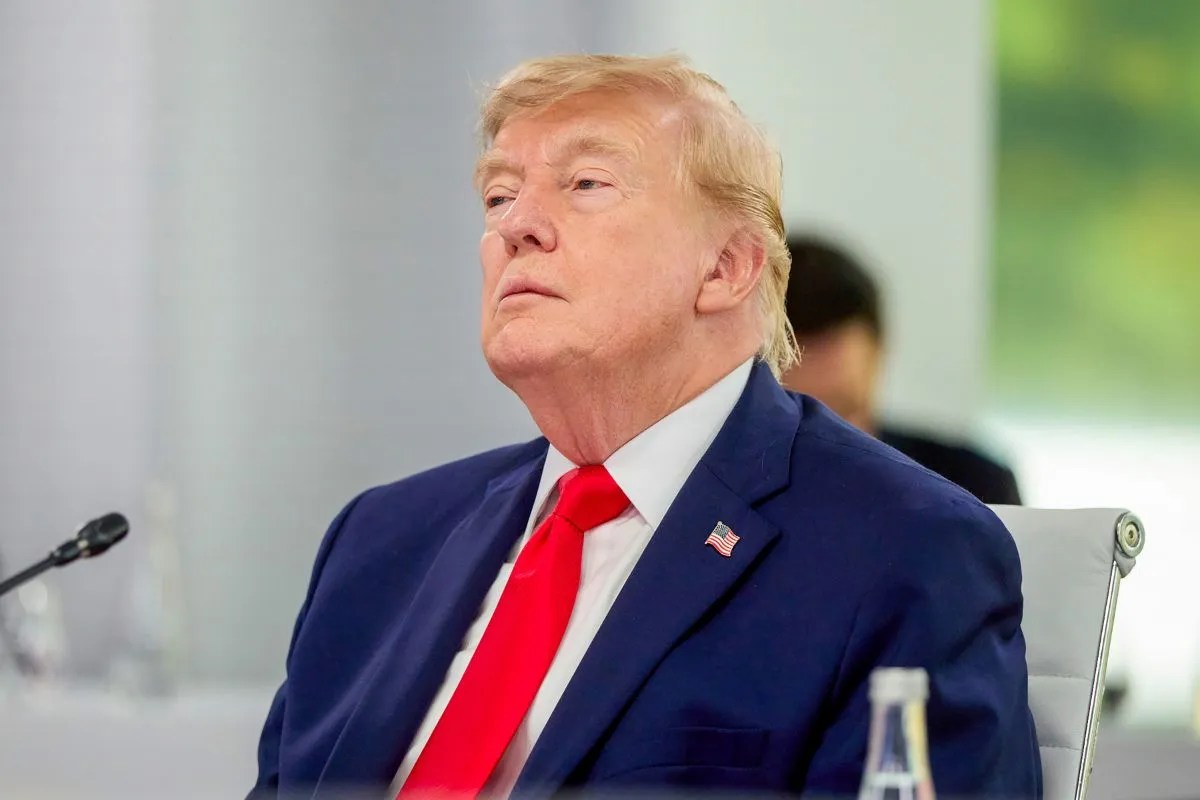
US President Donald Trump's approval rating has continued to slide ahead of the midterm elections scheduled for 3 November, according to a report by the Wall Street Journal. Survey data going back to 1990 shows this is the lowest pre-midterm approval rating recorded for any US president in that period. Despite the slump, Trump has continued to claim victory for the Republican Party in the upcoming midterms.
Why has the approval rating dropped
According to American media reports, the decline comes at a difficult time for the Trump administration, with the country grappling with an ongoing confrontation with Iran alongside economic concerns linked to rising oil prices and inflation.
Separately, US media outlet Politico has reported that Trump is set to head out on the campaign trail in states considered Republican strongholds, where he will canvass for his preferred candidates. Citing sources, Politico reported that Trump will campaign in Iowa, Florida, Texas and Alaska before election day, with a scheduled event in Oklahoma also planned for next week.
US broadcaster ABC has reported that the US Supreme Court has allowed the Trump administration to use a federal citizenship database to verify voters' identities ahead of the midterm elections. According to the report, the Court, in a 6-3 majority ruling, lifted a lower court order that had barred the Department of Homeland Security from expanding a 40-year-old immigration database. The database is intended to help states identify non-citizens on voter rolls. Trump has repeatedly described voting by non-citizens as a serious threat to free and fair elections.
Trump rejects Iran's ceasefire proposal
President Trump has rejected a seven-day ceasefire proposal put forward by Iran. The Wall Street Journal reported that Trump has told aides he expects to resume bombing Iran after the midterm elections. The remarks follow his address to the United Nations General Assembly, in which he issued an open threat to completely destroy Iran.
"We will strike a big deal after the midterms"
Addressing the General Assembly on 22 September, Trump said he had a major decision to make: whether to reach an agreement with Iran that would allow it to rebuild and become "an even greater nation — perhaps one of the finest in the Middle East or the world," or to destroy the Islamic Republic swiftly so that it would never again have the chance to kill and destroy people and nations. However, he added that he believed a deal would be struck immediately after the elections, saying it made no sense for Iran not to agree to one.
Iran had proposed the ceasefire earlier
On Thursday, Iranian Foreign Minister Seyed Abbas Araghchi said Iran had proposed a seven-day plan to end the ongoing conflict in West Asia. The plan was aimed at reopening the Strait of Hormuz, to be followed by broader talks on Iran's nuclear programme.