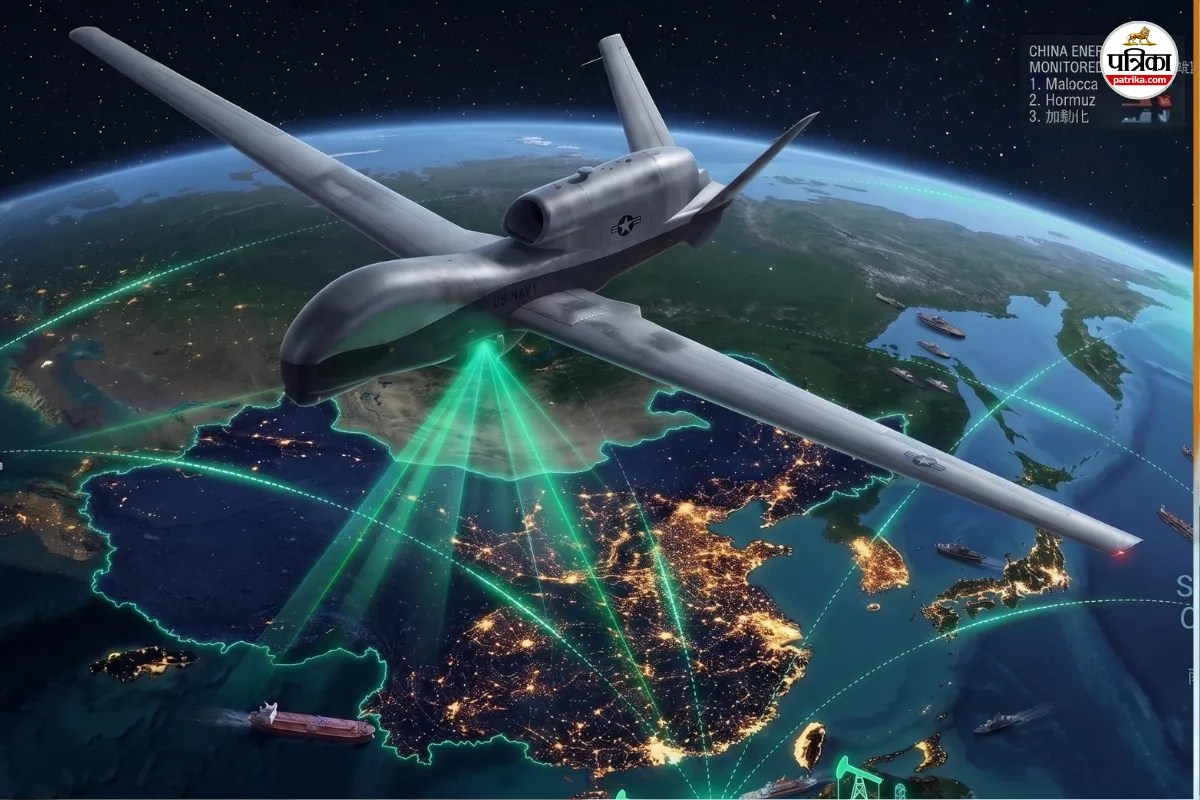
The United States has intensified its strategy to pressure China’s oil supply and maritime routes by deploying MQ-4C drones over Cuba. This move signals a new wave of tension in global energy politics.
The United States has intensified surveillance by deploying MQ-4C Triton drones over Cuba, a move widely viewed as a strategic manoeuvre to pressure China’s oil supply lines. This high-tech unmanned aerial vehicle (UAV) is capable of sustained high-altitude flights, providing persistent monitoring of vital maritime routes.
The US has previously attempted to influence China’s energy security through presence in Venezuela, the Strait of Hormuz, and the Malacca Strait. Cuba is now emerging as a critical fourth front, signalling a further escalation of tensions in global energy politics.
The United States has already taken three significant steps. First, establishing effective control over Venezuelan oil reserves. Second, influencing oil supplies through Iran and the Strait of Hormuz. Third, increasing surveillance in the Strait of Malacca, through which approximately 80% of China’s maritime oil imports pass. These three strategies have heightened the pressure on China’s energy security. Although China has attempted to find a balance by increasing imports from Russia and other nations, this remains only a temporary solution.
Cuba has now become the fourth vital hub in this strategic game. By controlling the maritime routes of the Caribbean region, the US can not only limit Chinese activities but also strengthen the security of its southern coast, particularly Florida. Furthermore, Chinese electronic surveillance centres in Cuba are a matter of concern for the US. According to reports, the drone also conducted surveillance around the Bejucal area, where Chinese intelligence activities are suspected. President Donald Trump’s statement also points in this direction. He remarked, "I can do anything with it," reflecting the potential US strategic grip on Cuba.