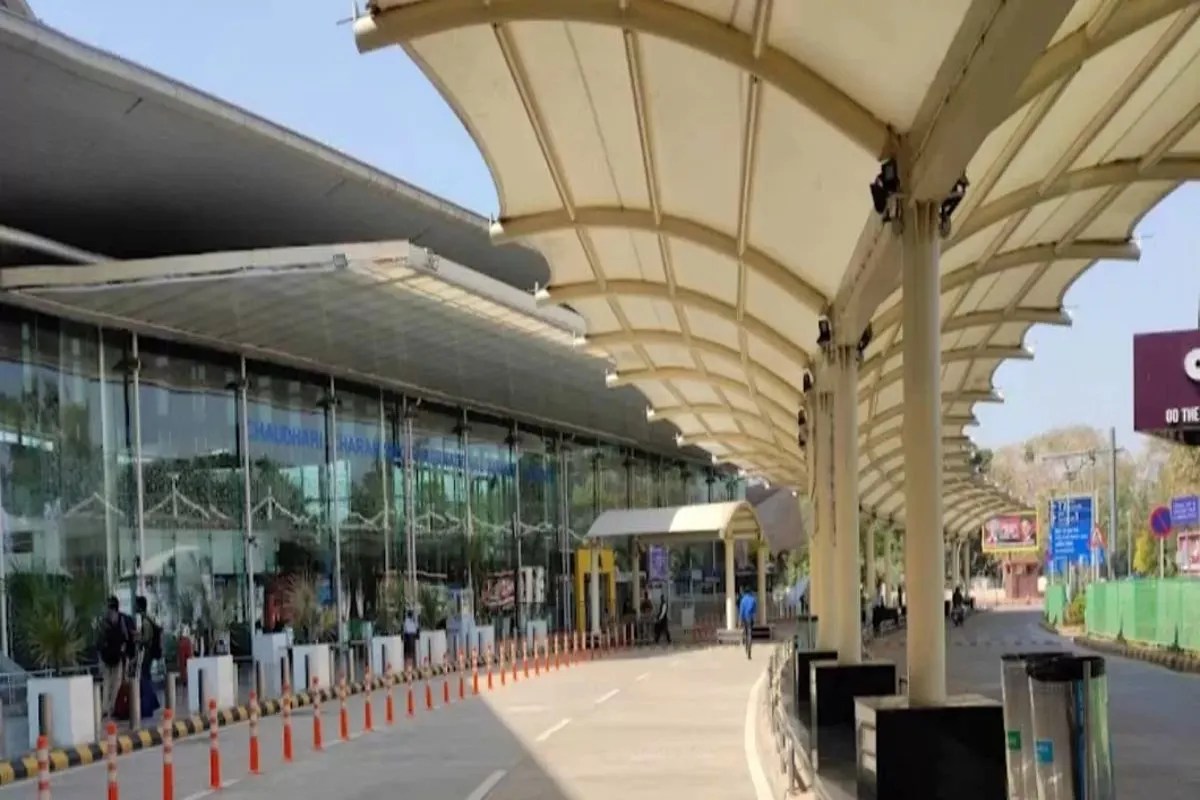
Lucknow Airport Boost: The commencement of the new taxi-way P3 at Lucknow's Amausi Airport will facilitate aircraft movement, increase holding capacity, and improve traffic management during peak hours.
Lucknow Amausi Airport: A significant piece of good news regarding passenger and flight operations has emerged from Lucknow's Chaudhary Charan Singh International Airport (Amausi Airport). The airport administration has commissioned the new taxi-way P-3, increasing the total number of taxi-ways from 7 to 8. This new facility is expected to make flight operations smoother and faster.
This step has been taken at a time when the airport was facing increased operational pressure due to continuously rising air traffic. The commencement of the new taxi-way will not only enhance the holding capacity for aircraft but also make traffic management more efficient during peak hours.
A taxi-way is the path through which aircraft move to and from the runway to the parking bays. If the number of taxi-ways is insufficient, aircraft have to wait for extended periods, leading to delays and congestion. Amausi Airport had been experiencing a shortage of taxi-ways for a long time. Due to the increasing number of flights and passengers, aircraft often had to wait on the runway or taxi-way, affecting operations.
Currently, Lucknow Airport handles approximately 110 to 116 flights daily. Additionally, around 17,000 passengers travel through this airport every day. The number of passengers has seen a consistent rise over the past few years, putting pressure on the airport's infrastructure. This pressure intensifies during festivals, holidays, and peak travel times. In such scenarios, the lack of taxi-ways often necessitated holding flights, leading to delays for passengers.
With the commissioning of the new taxi-way P-3, aircraft movement will become more organised. This will increase the capacity to handle more aircraft simultaneously and reduce congestion on the runway. According to officials, this new taxi-way will be most beneficial during peak hours. In the morning and evening, when the number of flights is high, traffic management becomes a significant challenge. The new taxi-way will now allow aircraft to receive take-off and landing clearances in a shorter time.
The airport administration had been grappling with this issue for a long time. The shortage of taxi-ways frequently caused disruptions in operations and put additional pressure on Air Traffic Control (ATC). The commencement of the new taxi-way has brought significant relief to the administration. This will not only improve operations but also lay the groundwork for future increases in flight movements.
Passengers will directly benefit from this new facility. The chances of flights operating on time will increase, leading to fewer delays. Furthermore, the time taken for aircraft to taxi will also decrease, potentially reducing the overall travel time. Passengers often had to wait for extended periods inside the aircraft after take-off or landing, but this problem is now expected to be significantly mitigated.