News Bulletin

COP31 in Turkey: India Asks Developed Countries to Fulfil Climate Finance Obligations Under Paris Agreement

UNEP says the chance of keeping warming below 1.5°C with no or limited overshoot has gone, while action lags behind three decades of climate pledges.
2 min read
• •
Updated: 11 Nov 2026, 9:55 AM IST
Cop 31
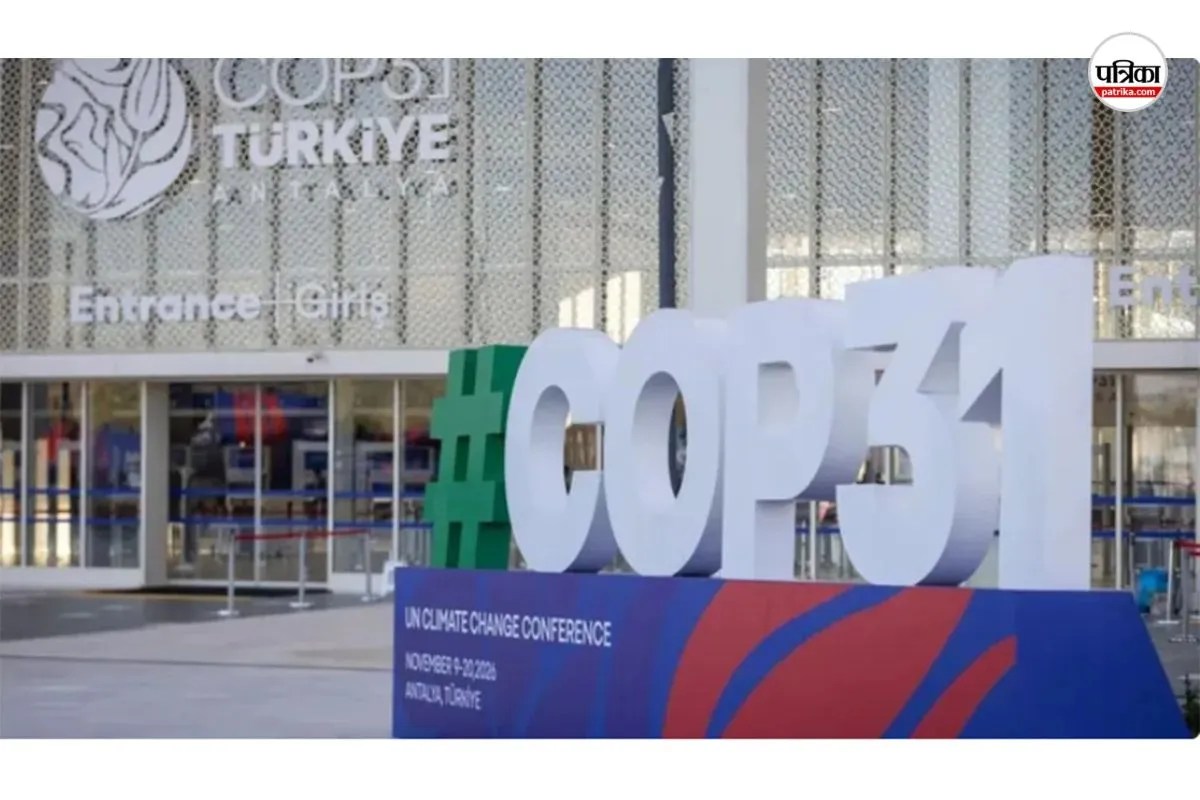
COP31 conference (Photo: ANI)

Countries have been gathering on the United Nations platform for more than three decades to tackle climate change. The annual COP conferences make pledges to cut greenhouse gas emissions, control global temperature rise and provide financial help to developing countries, but action on the ground is still far behind expectations.

At COP31, which began in Antalya, Turkey, on 9 November, India has also asked developed countries to fulfil their climate finance obligations. The question is what these conferences have given the world so far, and why their promises are not being put into practice despite the growing climate crisis.

Three Decades of Effort: Some Key Milestones

  • 1992, Rio Earth Summit: The UN Framework Convention on Climate Change (UNFCCC) was opened for signature. Its aim was to stabilise the amount of greenhouse gases in the atmosphere.
  • 1997, Kyoto Protocol: Binding emission-cut targets were set for developed countries. However, participation of all major emitters could not be ensured.
  • 2009, Copenhagen: Developed countries promised to provide developing countries $100 billion a year in climate finance by 2020. However, there was a delay in achieving the target.
  • 2015, Paris Agreement: The goal was set to keep global temperature rise well below 2 degrees Celsius compared with pre-industrial levels and to make efforts to limit it to 1.5 degrees. All countries adopted a system of submitting national emission-cut targets.
  • 2021, Glasgow: Countries agreed to reduce the use of coal and speed up climate action.
  • 2022, Sharm el-Sheikh: Countries agreed to create a Loss and Damage Fund to help vulnerable countries affected by climate disasters.

Growing Gap Between Promises and Reality

The biggest weakness of the conferences is that their decisions are taken by consensus, and there is no effective mechanism to compel any country to meet the targets it has set. As a result, the gap between announced emission-cut targets and actual efforts has kept widening.

According to reports of the UN Environment Programme (UNEP), the chance of keeping global warming below 1.5 degrees Celsius, with no or limited overshoot, has gone. The challenge before the world is to limit the peak in temperature rise to 1.7 to 1.8 degrees.

Even so, the COP conferences remain relevant. The expansion of renewable energy, initiatives to reduce carbon emissions and a global platform for the voice of developing countries are among their achievements. It is also the most important forum for fixing the accountability of developed countries on the climate crisis. The real challenge now is not making new pledges but putting old ones into practice.

India at COP31: Developed Countries Should Fulfil Financial Responsibility

India has reiterated its commitment to climate multilateralism, equity and equitable outcomes at COP31 in Antalya, Turkey. Delivering India's opening statement at the conference, Narendra Bhooshan, Secretary in the Ministry of Environment, Forest and Climate Change, said it was essential to keep the needs and circumstances of developing countries at the centre of global efforts to tackle climate change.

Stressing the principle of Common But Differentiated Responsibilities and Respective Capabilities (CBDR-RC), India said developed countries should fulfil their obligation under Article 9.1 of the Paris Agreement to provide financial resources to developing countries. Public finance and financial support for adaptation are particularly important.

India said that, amid the possibility of the 1.5-degree warming limit being crossed, equity, just transition and climate adaptation must be given priority. For developing countries, economic growth and people's welfare alongside climate action are also a big challenge. India expressed its commitment to work with all countries to achieve a fair, equitable and ambitious outcome.

Updated on:
11 Nov 2026, 9:55 AM IST
Published on: