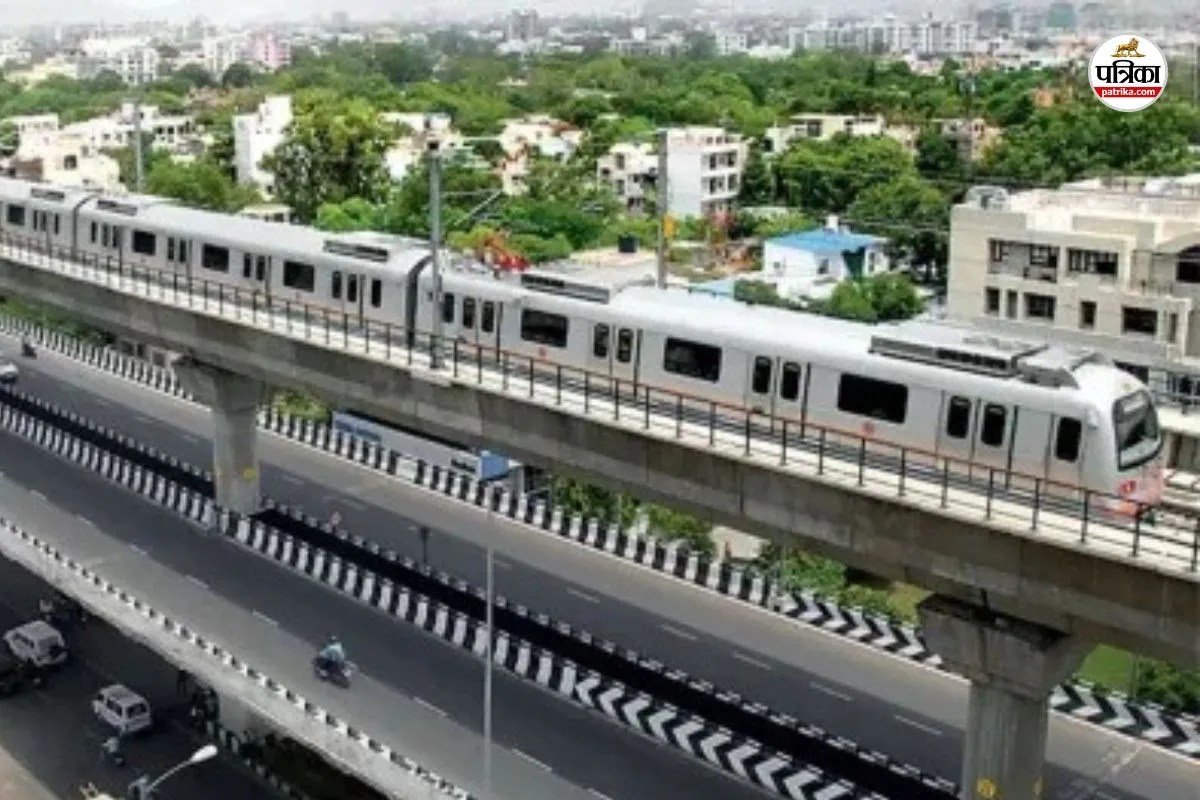
Preparations to expand Jaipur's metro network have gathered pace following Prime Minister Narendra Modi's foundation-laying ceremony for the second phase of the Jaipur Metro on 4 June. The Rajasthan government has now begun working on plans for the metro's third phase, along with future corridors that could bring the service to several new areas of the city.
According to officials, the metro administration has assigned an agency to carry out a feasibility study of potential routes. The agency's report, once submitted, will form the basis on which new metro routes are finalised.
Initial plans focus on connecting rapidly developing localities such as Vaishali Nagar, Jagatpura, Malviya Nagar and Ramgarh Mor to the metro network. Alongside this, authorities are exploring the possibility of running a "metro-lite" service to outlying towns including Chaksu, Bassi, Chomu, Bagru, Fagi and Chandwaji.
The metro-lite model is specifically being considered to link the city's outer areas, with proposals under preparation to connect Bassi to Transport Nagar, Chaksu to Sitapura, Chomu to Doti, Fagi to Sanganer, and Bagru to the 200 Feet Crossing.
It may be recalled that former Chief Minister Ashok Gehlot had announced in a state budget that metro services would be extended up to Bassi, with a Detailed Project Report (DPR) to be prepared for the purpose. The current Bhajanlal Sharma-led government is now deliberating on a metro-lite model for low-ridership feeder corridors connecting Jaipur's suburban fringes, including Chaksu, Bassi, Chomu, Bagru, Fagi and Chandwaji.
Meanwhile, construction work on Jaipur Metro's Phase 2 project has taken a significant step forward, with test piling now under way near the Ring Road in Prahladpura. The process is being carried out to assess the strength of the foundation and the load-bearing capacity of the ground for the elevated corridor. Senior metro officials were present at the site on Friday to oversee the testing.
During the test piling process, piles will be inserted at designated locations and subjected to load testing to determine whether the ground can safely bear the weight of the metro's support pillars. The depth, diameter and design of the piles will be finalised based on the test results. Once this process is complete, permanent piling and pillar construction will begin at the relevant sites, alongside a faster pace of utility shifting and other civil works.