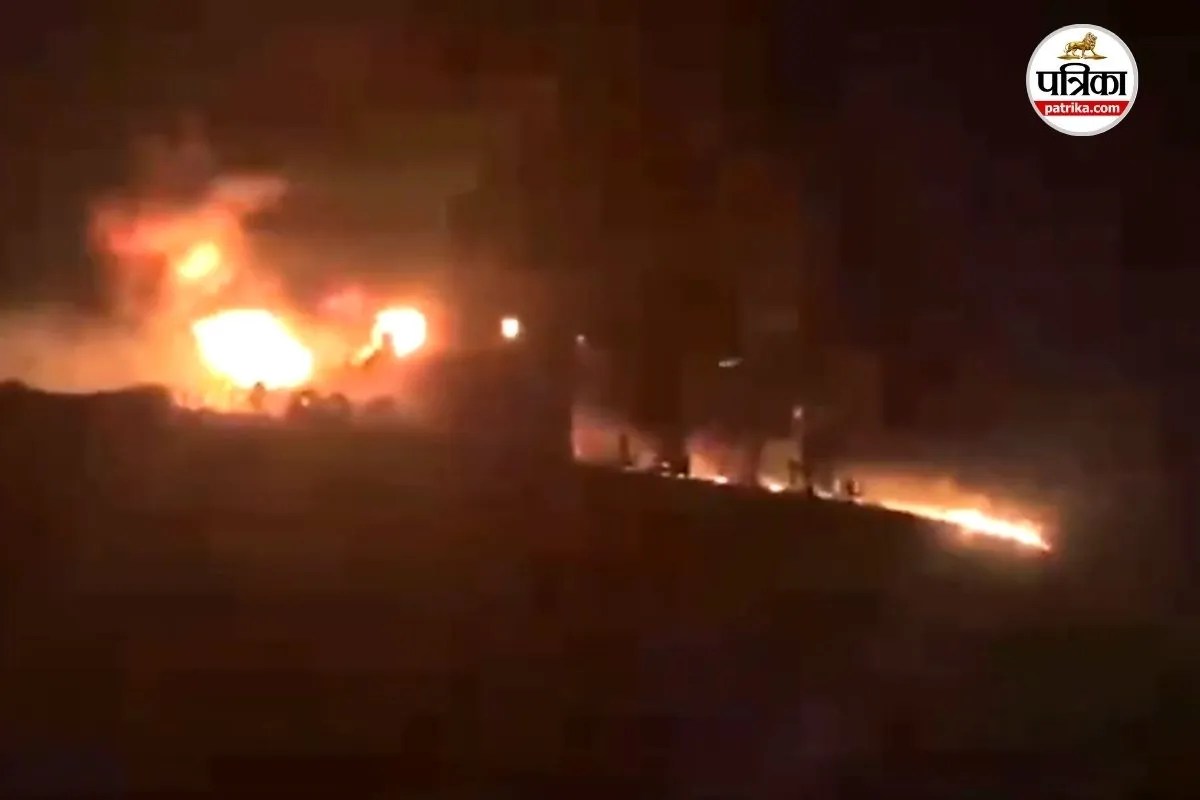
The Islamic Revolutionary Guard Corps (IRGC) Navy of Iran has officially stated that a giant supertanker carrying more than 20 lakh barrels of crude oil hit a sea mine while passing through the Strait of Hormuz. According to Tasnim, Iran's semi-official news agency, the collision took place when the tanker was trying to cross the strait through an unauthorised sea route. After hitting the mine, the vessel reportedly suffered a powerful explosion and was soon engulfed in flames.
Allegations of Switching Off Tracking Systems and Seeking US Help
Making allegations about the tanker's movements, the Iranian Navy claimed that the vessel had completely switched off its tracking, navigation and radar systems to hide its location and identity. The IRGC said the tanker had tried to leave the strait with the support and protection of the US military. Targeting American security forces, the Iranian military said this destructive explosion was the direct result of ignoring the rules and relying on American support.
Iranian Navy Issues Stern Warning to Ships
Following the incident, the Iranian Navy warned that the Strait of Hormuz is closed. The IRGC has cautioned all commercial and military vessels passing through the Gulf region that any ship found violating Iranian maritime rules or security guidelines will face serious consequences. The statement clearly warns that any vessel that tries to pass through the Iranian maritime area without permission, under the cover of American support, will face serious consequences.
Why Is the Strait of Hormuz Important for Global Oil Supply?
The Strait of Hormuz is an important sea route that connects the Persian Gulf with the Gulf of Oman and the Arabian Sea. Crude oil and natural gas from the Gulf region reach many countries around the world through this route. If the movement of ships through it is disrupted, the costs of oil shipping, insurance and maritime transport could rise. During the current conflict, attacks on ships and restrictions on their movement have already affected maritime trade.