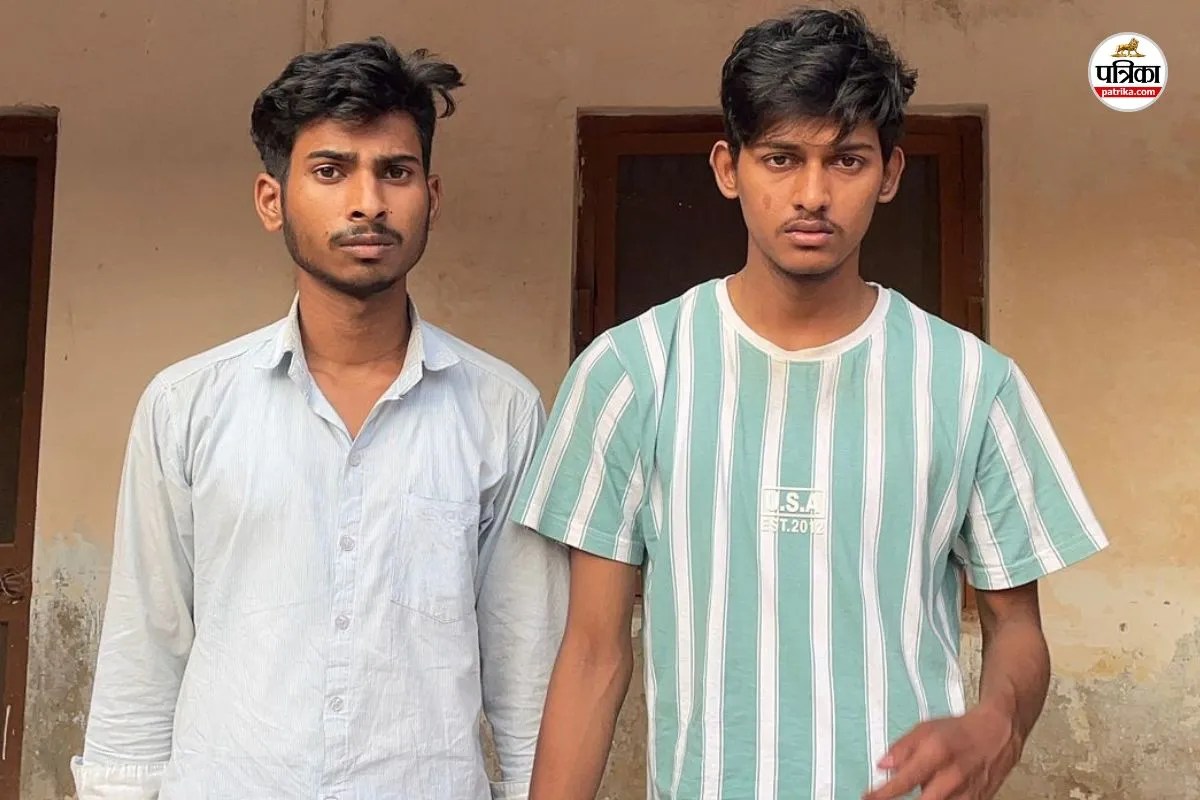
In a shocking case of digital fraud targeting anxious medical aspirants, the Ajmer district police have arrested two first-year B.Tech engineering students for deceiving students and their parents in the name of the Re-NEET Examination 2026.
The two accused were arrested from Karnal, Haryana, where they were studying engineering. The arrested youths have been identified as Akash Kumar (19), a resident of Madhubani, Bihar, and Ashwani Kumar (19), from Kasganj, Uttar Pradesh — both currently living in Karnal.
Akash, looking for ways to fund his college expenses, took advantage of the controversy surrounding the NEET paper leak in May and used artificial intelligence to create a fake Re-NEET question paper. He then created fake social media accounts, uploaded videos of the fabricated paper, and began contacting people who commented on those posts.
When students or parents reached out, the accused would show them the fake question paper over a video call and demand anywhere between ₹10,000 and ₹30,000. Once payment was made via a QR code, the fraudulent paper was sent to the victim.
The matter came to light on June 19, when a female student informed Krishna Singh, President of the Dayanand College Students' Union, that an unknown person was contacting her via mobile, claiming to have the Re-NEET question paper. Singh, to verify the claim, contacted the accused from a friend's phone. During the video call, the accused displayed the alleged paper and sent a QR code for payment. Singh recorded the entire conversation and transaction attempt as evidence, and on June 23, filed a formal complaint at Ramganj Police Station.
Police traced the mobile numbers and digital activity provided by the complainant, which led them straight to Karnal, Haryana, where they detained and questioned both suspects. During interrogation, the accused confessed to preparing fake papers and extorting money from students.
Investigation revealed that Akash had deliberately trained himself in AI tools, video editing, and graphic design specifically to pull off the scheme. Both accused come from middle-class families and had devised this shortcut to finance their own engineering education — a plan that ultimately unravelled when police tracked them down through their bank account details.
Police are now examining the accused's mobile phones, social media accounts, and bank transactions to determine how many victims were defrauded and whether others were part of the network. Authorities have warned that cyber fraudsters frequently exploit the anxiety of students during competitive exams, and urged the public to remain vigilant against such scams.