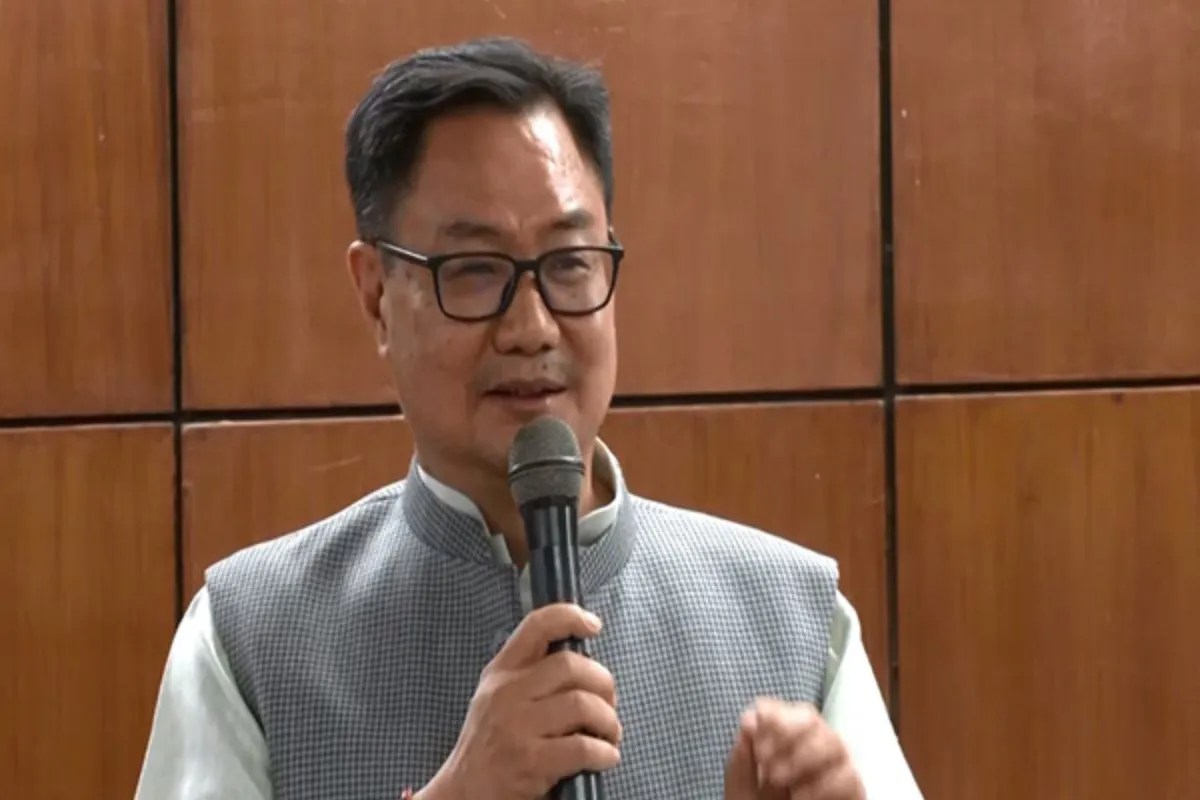
Union Minister Kiren Rijiju has claimed that India was once among the slowest-growing economies in the world, but that the picture has now changed. He said India is moving ahead in many areas and that developed countries have also begun seeking its advice on different matters.
India once lagged in economic growth
Referring to the change in India's economic position, Rijiju said the country had come a long way over the past few years.
According to him, India was earlier counted among the economies where growth was very slow. He said the country is now moving ahead on many fronts and building a distinct identity in the world.
India no longer only learns from other countries' experiences
Rijiju said India's changing position is also visible at the international level. India is no longer a country that only learns from the experiences of others, he said. In many matters, other countries are now giving importance to India's experience and suggestions as well.
The Union minister also spoke about a drug-free India. He said: "If we fail to achieve a drug-free India, it will be a big challenge for Viksit Bharat (developed India)."
India's role has grown with economic change
India's economy has seen several major changes in recent years. The expansion of digital payments, online government services, investment in infrastructure and efforts to make doing business easier have given the country's economic activity a new direction.
India is among the world's big markets. Its large population, fast-growing digital use and business opportunities attract international companies. This is why India continues to have an important role in global economic discussions.
However, economic growth cannot be judged on the growth rate alone. Employment, inflation, the income of ordinary people and the economic condition of rural areas are equally important. It is therefore necessary to pay attention to these challenges along with India's achievements.
India still faces many challenges
At present, India also faces challenges such as creating enough job opportunities, helping young people find better work, raising farmers' incomes and reducing economic inequality.