18 September 2026,
Friday
18 September 2026,
Friday
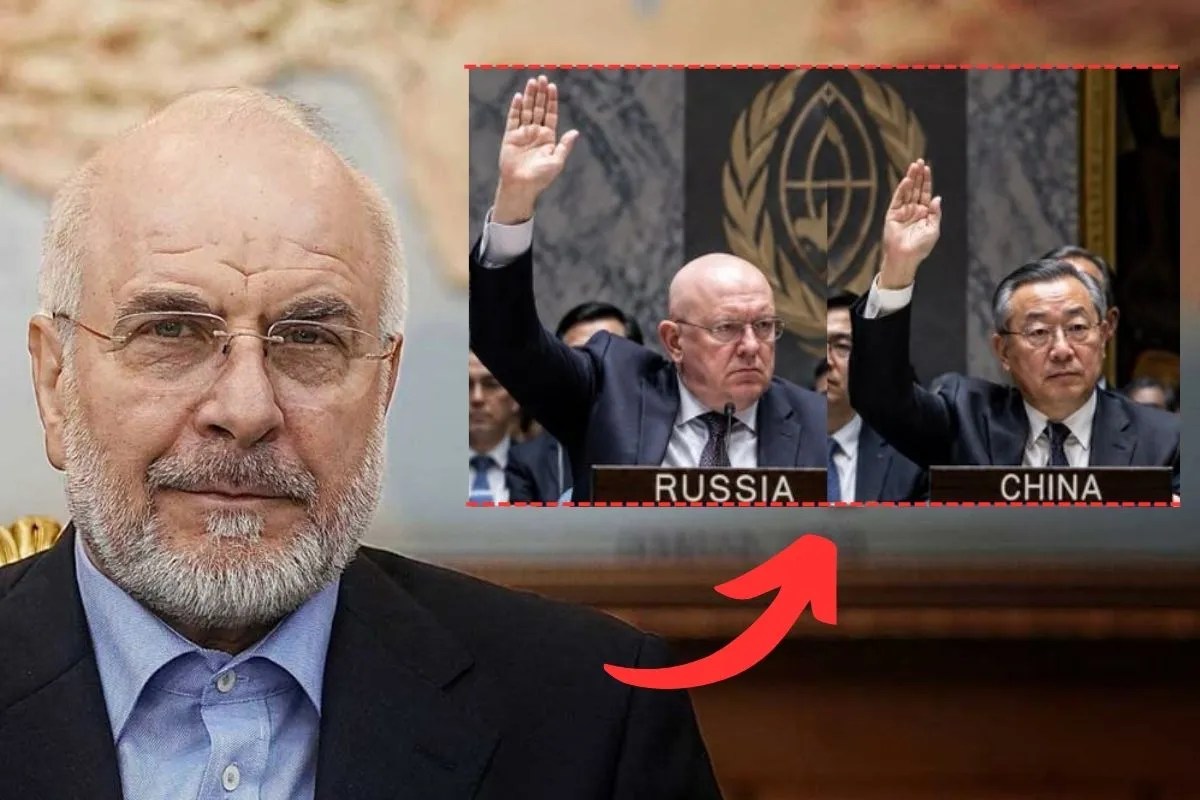
Iran praised Russia and China. The photo shows Iranian Speaker Ghalibaf and representatives of Russia and China exercising veto power at the UNSC (Image source: ANI and @Mossad Commentary X screenshot)
Tensions between the United States and Iran have escalated again after a development at the United Nations that brought significant relief to Tehran. Russia and China vetoed a US-drafted resolution at the United Nations Security Council (UNSC), prompting Iran to openly praise the stance taken by both countries. Mohammad Bagher Ghalibaf, Speaker of Iran's Parliament, described the move as an important step against unilateral decisions.
Iranian Speaker Ghalibaf welcomed the decision by Russia and China on the social media platform X. He said that the one-sided arrangement, in which one party secures exemptions through pressure, has now ended. He stated that the veto by both countries had rejected the political use of the UNSC.
He also stressed the need to strengthen multilateralism, saying that unilateral decisions serve no one's interest. His remarks made clear that Tehran regards the vote as significant diplomatic support for itself.
The United States had put forward a draft resolution at the UNSC seeking to extend by one year the mandate of the panel of experts linked to the 1737 Iran Sanctions Committee, extending it until September 2027.
According to the UNSC, the resolution received 11 votes in favour, while Russia and China voted against it. Somalia and Pakistan abstained. As Russia and China are both permanent members of the UNSC, their negative votes meant the resolution could not pass.
Russia and China have previously questioned the position of Western countries on sanctions against Iran. In August 2025, France, Germany and Britain triggered the snapback mechanism to reimpose UN sanctions on Iran. Russia and China had called that move legally invalid.
Following the vote, the United States and Britain questioned the decision by Russia and China. US Ambassador Jennifer Loseta said the resolution could have brought to light information about prohibited defence cooperation between Iran and its allies.
British Ambassador Sarah McIntosh also criticised the decision by Russia and China. Russian Ambassador Vassily Nebenzya said the necessary legal and procedural grounds for the process did not exist, while Chinese Ambassador Fu Cong called for talks and diplomacy to be taken forward.
The dispute has also affected the monitoring of sanctions on Iran, as the mandate of the expert panel linked to the 1737 Committee could not be extended. According to the UNSC, the role of the International Atomic Energy Agency (IAEA) in the independent monitoring of Iran's nuclear programme has now become more significant.
On 10 September, the IAEA Board of Governors asked Director General Rafael Grossi to report to the UNSC on Iran's compliance with its obligations. Western countries allege that Iran has violated the 2015 nuclear deal, an accusation Iran has consistently denied.