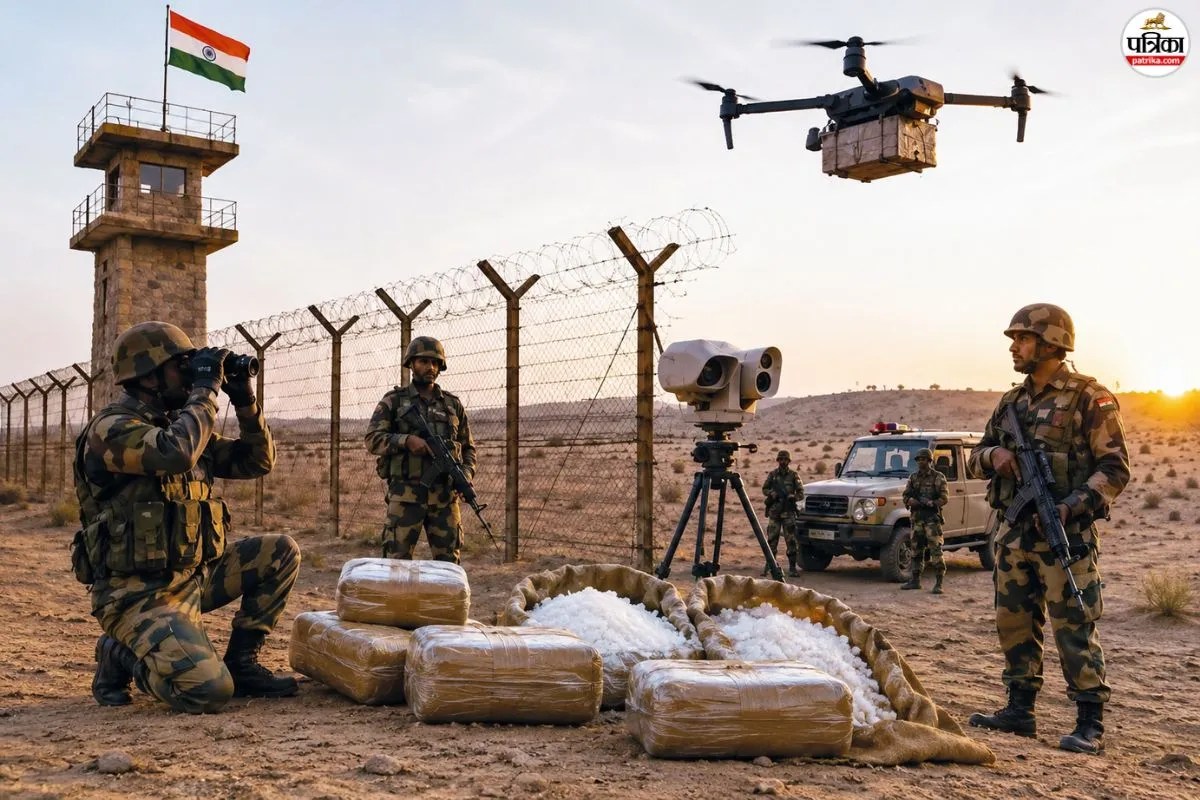
Jaisalmer, one of India's most strategically significant border districts, is at the forefront of a rapidly evolving battle against drug smuggling along the India-Pakistan frontier. What was once a fight waged through patrols and informant networks has transformed into a sophisticated contest involving drones, encrypted communications, GPS tracking, and multi-agency intelligence coordination.
The approximately 1,070-kilometre-long international border stretching through Rajasthan has long been a sensitive zone for security agencies. Traditional smuggling methods have increasingly given way to the use of drones, GPS-guided drops, and encrypted communication channels by traffickers.
Drones Change the Face of Smuggling
In March 2025, Union Minister of State for Home Affairs Nityanand Rai informed the Lok Sabha that the BSF had seized 294 drones along the Punjab border in 2024 alone. To counter this growing aerial threat, anti-drone systems have been deployed along sensitive stretches. Coordination has also been strengthened between the BSF, the Indian Air Force, local police, and other security agencies. Surveillance posts, technical equipment, and intelligence networks in border areas have all been significantly upgraded.
A Global Crisis with Local Impact
According to the United Nations Office on Drugs and Crime (UNODC) World Drug Report 2025, approximately 316 million people worldwide consumed some form of illegal narcotic substance in 2023 — including around 244 million cannabis users and 61 million opioid users. The report warns that the global illicit drug trade continues to expand at an alarming rate.
Key Facts at a Glance
Zero Tolerance on the Border
Jaisalmer Superintendent of Police Abhishek Shivhare emphasised that the district follows a strict zero-tolerance policy against narcotics. He urged youth to stay away from drugs and channel their energy positively, and called on citizens to immediately report any information related to drug trafficking or related activities to the police.