4 March 2026,
Wednesday


4 March 2026,
Wednesday
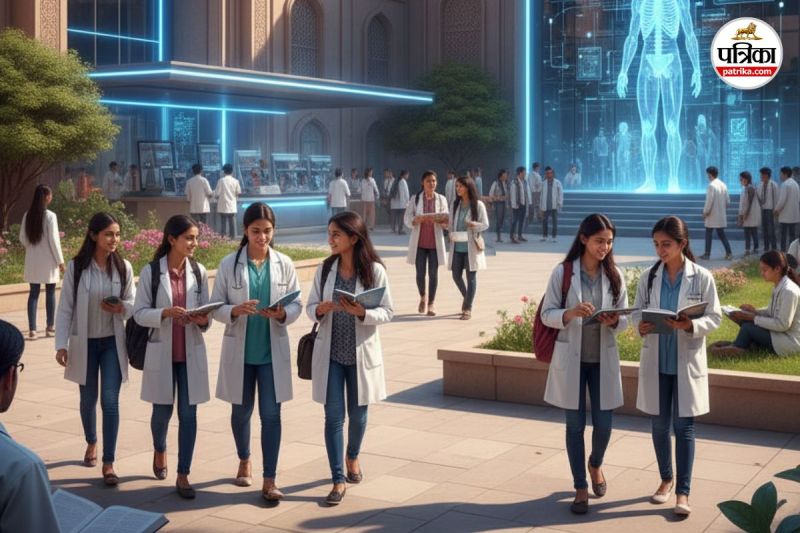
MBBS seats in India (Image: Gemini AI)
Medical Education: The Union Cabinet, chaired by Prime Minister Narendra Modi, has approved the third phase of a centrally sponsored scheme to add 5,023 MBBS seats and 5,000 PG seats in existing government medical colleges and institutions at a cost of ₹1534 crore over the next three years. This initiative will boost medical education. Creating additional postgraduate seats will increase the availability of specialist doctors and help introduce new specialisations in government medical institutions. This will strengthen the overall availability of doctors in the country.
The Cabinet approved a ₹15,034.50 crore scheme to increase PG and UG seats to boost medical education. Chaired by Prime Minister Narendra Modi, the Union Cabinet on Wednesday approved the third phase of the Centrally Sponsored Scheme (CSS) to strengthen and upgrade existing medical colleges of state/central governments, independent PG institutes and government hospitals.
Under this scheme, 5,000 PG seats will be added, and the CSS will also be expanded for the upgrade of existing government medical colleges, adding 5,023 MBBS seats. The cost per seat has now been increased to ₹1.50 crore.
The total financial outlay for both schemes will be ₹15,034.50 crore between 2025-26 and 2028-29, with the central government's share being ₹10,303.20 crore and the state government's share being ₹4731.30 crore.
Currently, India has the highest number of medical colleges in the world, with 808 colleges having a total capacity of 1,23,700 MBBS seats. In the last 10 years, 69,352 new MBBS seats have been added in the country, representing a 127 percent increase. During the same period, 43,041 PG seats were also added, a 143 percent increase.
The Cabinet stated that this initiative will increase undergraduate medical capacity, increase the number of PG seats to increase the availability of specialist doctors, and allow for the introduction of new specialities in government medical institutions. Overall, this initiative will strengthen the overall availability of doctors in the country.
The scheme aims to provide more opportunities for students to pursue medical education in India, improve the quality of medical education and training to global standards, and increase the availability of doctors and specialists. Specifically, this initiative is expected to create direct and indirect employment opportunities in the form of doctors, faculty, paramedical staff, researchers, administrators, and support services.
Big News
View AllEducation News
Trending