5 October 2026,
Monday

5 October 2026,
Monday
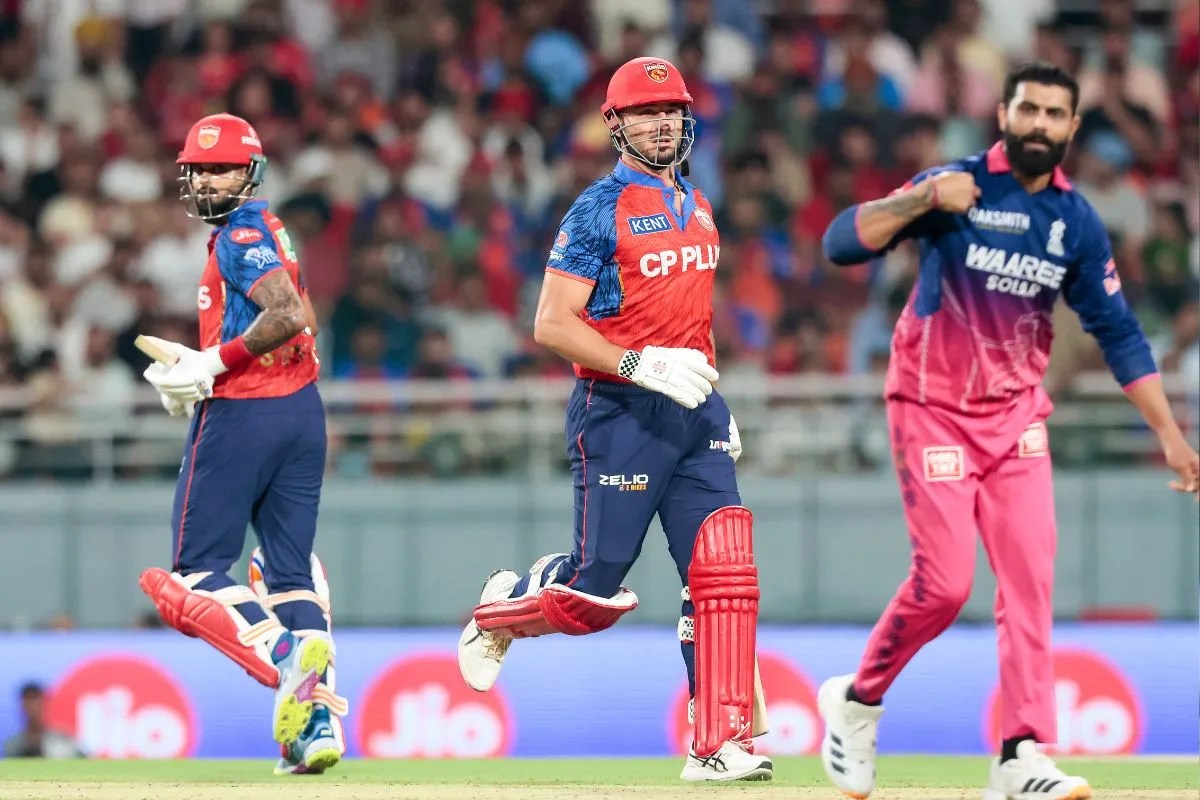
Image for representational purposes (Source: IANS)
BCCI worried about fixing in IPL 2026: The One-Day series played between India and South Africa in the year 2000 remains mired in controversy over match-fixing to this day. In one match of that series, a deal had allegedly been struck for South African explosive opener Herschelle Gibbs to score fewer than 20 runs. However, Indian fielders dropped his straightforward catch. Given a new lease of life, Gibbs proceeded to hammer the Indian bowlers and turned the match on its head.
After the match concluded, the fixers expressed their displeasure to South African captain Hansie Cronje. In his defence, Cronje remarked, "If Indian fielders are going to drop such easy catches, Gibbs will naturally score runs. Had the catch been taken, the match would have swung exactly as we had agreed." Cronje had absolutely no idea that the Delhi Police were tapping his phone calls, and that his words would soon become public knowledge.
Ever since that match-fixing scandal, whenever a professional fielder drops a straightforward catch — particularly one that even an ordinary person could take with their eyes closed — suspicion arises immediately. This very spectacle has been witnessed repeatedly during the current season of the Indian Premier League (IPL). Dropped catches are a common occurrence in cricket, but when BCCI Secretary Devajit Saikia himself states that unauthorised individuals are roaming inside team hotels, buses, and dugouts, old memories come flooding back.
He issued a clear warning: "Unauthorised persons are boarding team buses, gaining entry into hotels, and individuals are being spotted in dugouts where they have no business being. Rules have been in place since 2008, but people have grown careless. Any violation henceforth will be dealt with strictly."
The IPL is now in its business end, with the play-offs drawing near. It is therefore entirely natural to ask — how long have these unauthorised individuals been gaining entry? Why were they allowed inside in the first place? And what exactly were they doing there? When the world's biggest cricket spectacle, the crown jewel of Indian cricket, finds itself surrounded by such questions, it is not a healthy sign.
Twenty20 cricket, and the IPL in particular, is a game of razor-thin margins. Here, even a genuine mistake is readily interpreted as part of a grand conspiracy. The moment a fielder drops a catch, suspicious eyes turn towards him and his integrity is called into question — especially when BCCI officials themselves are acknowledging that rules are being flouted.
The batting environment these days leaves no room for caution. Strike a magnificent shot off one ball and you are a hero; miss the next and you are deemed reckless and placed under scrutiny. Bowlers find themselves in much the same predicament — a matter of a millimetre or two determines whether a delivery is a dot ball or a wide. If it happens two or three times in succession, the whispers begin.
In every major cricket scandal of the past, the same pattern has invariably emerged — unwanted individuals gained easy access to restricted areas. In the 2013 IPL spot-fixing case, bookmakers were residing in players' hotel rooms, as was clearly documented in the police charge sheet.
Some years ago, the ICC made public the hearing in the Brendan Taylor fixing case involving Zimbabwe. Taylor had revealed that an Indian businessman was offering him a place in an Afghanistan league and $15,000 in exchange for fixing. He was subsequently taken on a tour of India, treated to drinks and parties, and then blackmailed.
The BCCI's open admission that unauthorised persons are gaining access even to dugouts is an extremely serious matter. The reputation and legacy of the IPL now rests upon perception and public trust. An atmosphere of suspicion is lethal for any league. One hopes the BCCI will now act with firm resolve — otherwise, these seemingly small acts of negligence may once again give rise to a far larger and more damaging story.