4 February 2026,
Wednesday


4 February 2026,
Wednesday
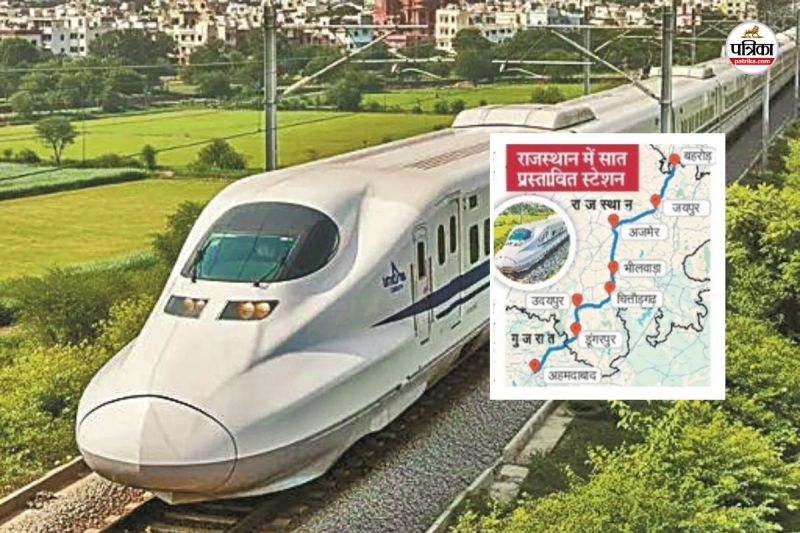
Bullet Train: The Rajasthan government has begun preparations to run a bullet train from Ahmedabad to Delhi via Jaipur. The survey for this route is complete, and its report has been submitted to the central government.
Railway experts say that the bullet train will boost both tourism and trade. A bullet train on the 886-kilometre route from Ahmedabad to Delhi via Jaipur has been proposed, and work on the ground is now reportedly commencing. The survey to assess the feasibility of this route began in February 2020 and has been completed. The report has been submitted to the central government.
The survey report identified a total of 13 proposed stations. This includes seven stations in Rajasthan, including Jaipur. In addition, three stations in Gujarat, two in Haryana, and one in Delhi are included. When contacted, officials from the High Speed Rail Corporation did not provide a clear response.
Kherwara (Dungarpur), Udaipur, Bhilwara, Chittorgarh, Ajmer, Jaipur, and Behror (Alwar). Rewari-Manesar (Haryana) and Dwarka Sector-1 (Delhi) are also proposed.
The train will have a speed of 320 to 350 km per hour. The journey from Ahmedabad to Delhi will be completed in 4 hours. The target is to complete the project by 2031. Initially, a satellite survey was conducted, followed by a remote sensing survey using LiDAR technology. This process was completed within a year.

Big News
View AllJaipur
Rajasthan
Trending