17 June 2026,
Wednesday

17 June 2026,
Wednesday
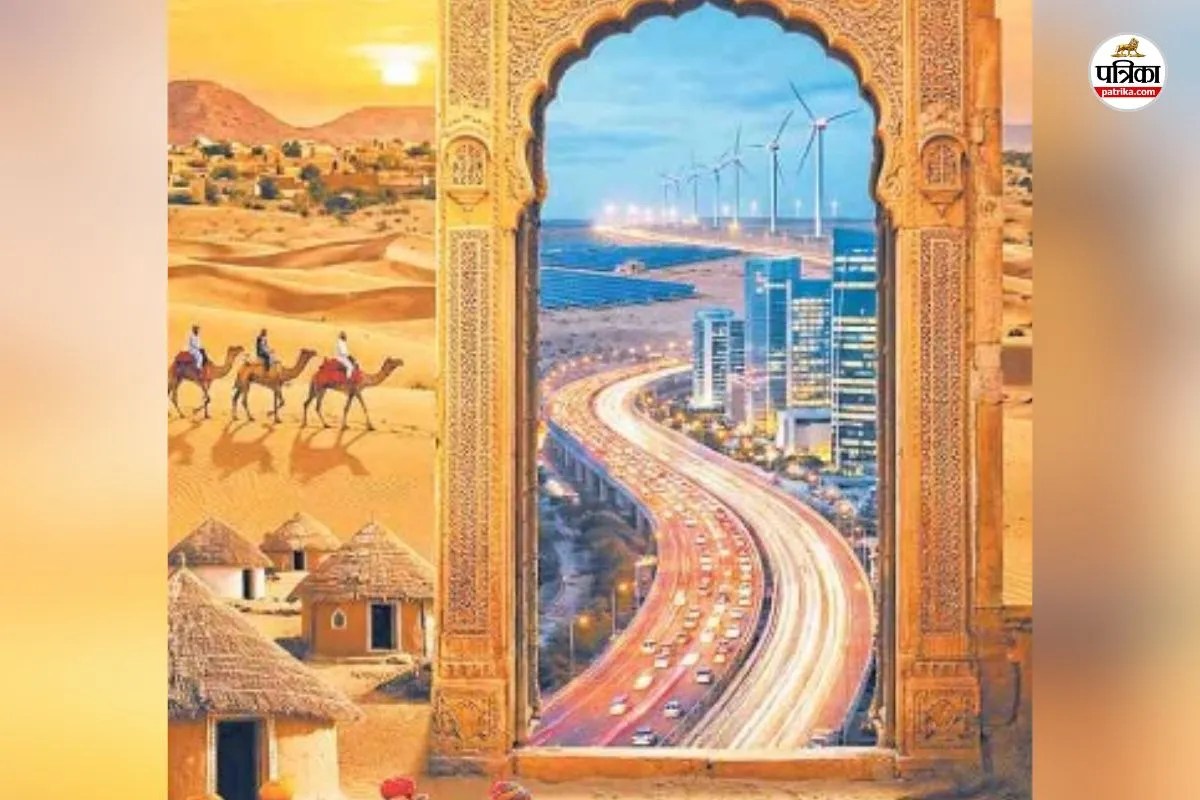
Image: Patrika
Jaipur: For Rajasthan Patrika, March 7 is not just its foundation day, but a symbol of seven decades of public trust, public dialogue, and public concerns. This newspaper, which began in 1956 with the dream and resolve of Karpoor Chandra Kulish, is completing 70 years today. In these seven decades, Patrika has not only delivered news to its readers but has also understood the pulse of society and given a voice to public interest issues.
Now, as Patrika enters its 71st year of establishment, eyes are also set on the next milestone, 2030. This will be the year when Rajasthan Patrika completes 75 years. Therefore, this year's foundation day theme is not just a celebration of past achievements, but also a resolve to determine the direction for the future. The question is, what should Rajasthan be like in the year 2030?
Rajasthan in 2030 should be a place where every child receives quality education, every citizen has access to accessible and better healthcare facilities, employment and entrepreneurship opportunities for youth increase, and basic amenities are strengthened from villages to cities.
Rajasthan Patrika believes that the future of the state is not determined solely by government policies, but also by societal participation. Therefore, this initiative is an effort to bring forth the collective thinking of all sections. Patrika has always provided a platform for public sentiment. Now, the vision of Rajasthan in 2030 will also take shape through this public participation.
According to Vision 2030, the state's goal should be to leap from its current 16th rank in the 'State Health Index' to secure a place among the top 5 states. Life expectancy will increase with the strength of health facilities. Maternal mortality rate must be reduced through safe deliveries and better infant care. Work needs to be done to minimise infant mortality. Medical infrastructure can be given new momentum by treating serious diseases and creating a new cadre of doctors. Super-speciality services need to be extended to villages and towns.
| Health Indicator | Current | 2030 |
|---|---|---|
| Life Expectancy (in years) | 69.9 | 72.0 |
| Maternal Mortality Rate | 87 | 70 |
| Infant Mortality Rate | 30 | 20 |
| Universal Health Coverage | 88% | 100% |
There is a need to increase the number of medical colleges to address the shortage of doctors in the state and for higher education opportunities. Currently, there are 42 medical colleges in the state. By 2030, one medical college should be opened in every district of the state. Additional medical colleges can also be opened in cities like Jaipur, Kota, Jodhpur, and Bikaner. Adequate resources should be provided for research in these medical colleges. There is also a need to work on the possibilities of opening new Ayurvedic colleges in the state.
| Indicator | Current | 2030 |
|---|---|---|
| Medical Colleges | 42 | 50 |
| Regional Institute of Medical Sciences | 00 | 01 |
| Super Specialty Services | 15 | 33 |
| Strengthened Trauma Centres | 15 | 33 |
| Mobile Cancer Screening Vans | 07 | 33 |
| District Ayurveda Hospitals | 33 | 41 |
| Block Level AYUSH Hospitals | 84 | 230 |
Despite desert conditions, Rajasthan has set a goal of ensuring universal access to safe drinking water and sustainable water management by the year 2047. There is a need for short-term goals rather than long-term ones. By 2030, work needs to be done to make the state's water security impregnable through technology and traditional knowledge. AI-enabled monitoring systems and smart systems can be used for water conservation.
Rajasthan needs to be established as a 'Global Tourism Power' by 2030. If the state balances the conservation of its heritage with smart innovations and modern technology, it will become the first choice for tourists worldwide. Rajasthan will not be limited to forts and palaces. With advanced infrastructure and digital engagement, it will also attract tourism enthusiasts.
| Tourism Indicator | Current | 2030 |
|---|---|---|
| State's Share in Tourism | 7.1% | 9% |
| Average stay of tourists in the state | 1.5 days | 2.3 days |
There is a need to create and work on an Irrigation Vision 2030 for the progress of agriculture and farmers in the state. In the coming years, the infrastructure for delivering water to fields through modern technologies should be strengthened. Considering the changing climate and water crisis, increasing water use efficiency must be a priority. The water use efficiency in the state is 35 per cent. Water wastage should be prevented through new technologies and better management. Maximum use of available water should be made in the fields.
There is a need to move forward with the goal of 'Education Vision 2030' to shape the future generation. The number of children in schools should increase, and the trend of dropping out of school should be completely eliminated by connecting them with modern technology. Experts believe that if this happens, enrollment will be 100% and drop-out will be zero. Only then will the state truly be a leader in the category of educated states.
| Indicator | Current | 2030 |
|---|---|---|
| Gross Enrolment Ratio (Primary) | 93.6% | 100% |
| Gross Enrolment Ratio (Secondary) | 80.2% | 90% |
| Gross Enrolment Ratio (Higher Secondary) | 62% | 80% |
| Schools with Smart Classrooms | 50% | 75% |
| Drop Out Rate (Secondary) | 11.1% | 0% |
In the agriculture sector, the goal of significantly increasing crop productivity through improved seeds, better technology, and accurate weather information by 2030 needs to be met. Along with this, attention must also be paid to the nutritional value of food on the plate and soil fertility. Considering protein needs, the productivity of pulses should also be increased. A roadmap for growth in the oilseed sector also needs to be prepared and worked upon.
| Indicator | Current | 2030 |
|---|---|---|
| Cereal Productivity | 2.20 | 2.40 |
| Pulse Productivity | 0.66 | 0.68 |
| Oilseed Productivity | 1.45 | 1.60 |
| Fruit Crops | 11.00 | 12.40 |
| Vegetable Crops | 12.16 | 14.50 |
| Crop Insurance Coverage | 28 | All crops |
| Weather Report Stations | 2,635 | 11,175 |
There is a need to strengthen the road network to accelerate the state's economy and facilitate transportation. In the coming years, revolutionary changes will be seen in the infrastructure, from expressways to rural connectivity roads. Freight transport and travel time will be reduced. The work of strengthening MDR roads and upgrading them to 2 lanes should be done rapidly.
| Indicator (in km) | Current | 2030 |
|---|---|---|
| Expressways | 991 | 1,821 |
| State and NH 4-lane | 607 | 3,000 |
| MDR 2-lane | 4,722 | 6,377 |
| Village-Settlement Connectivity Roads | 1,60,219 | 1,70,000 |
Rajasthan should now be recognised worldwide not only for its historical heritage but also for its modern and inclusive future vision. To bring the state into the category of developed states, there is a need to create a unique framework of economic prosperity along with social justice, environmental protection, and happiness. The state should move rapidly towards achieving the goal of 100% literacy and access to education by 2030. Special opportunities for skill development, entrepreneurship, and leadership should be created for youth and women. The future should be secured by giving special importance to carbon neutrality, biodiversity conservation, and green energy.
Big News
View AllJaipur
Rajasthan
Trending