30 May 2026,
Saturday

30 May 2026,
Saturday
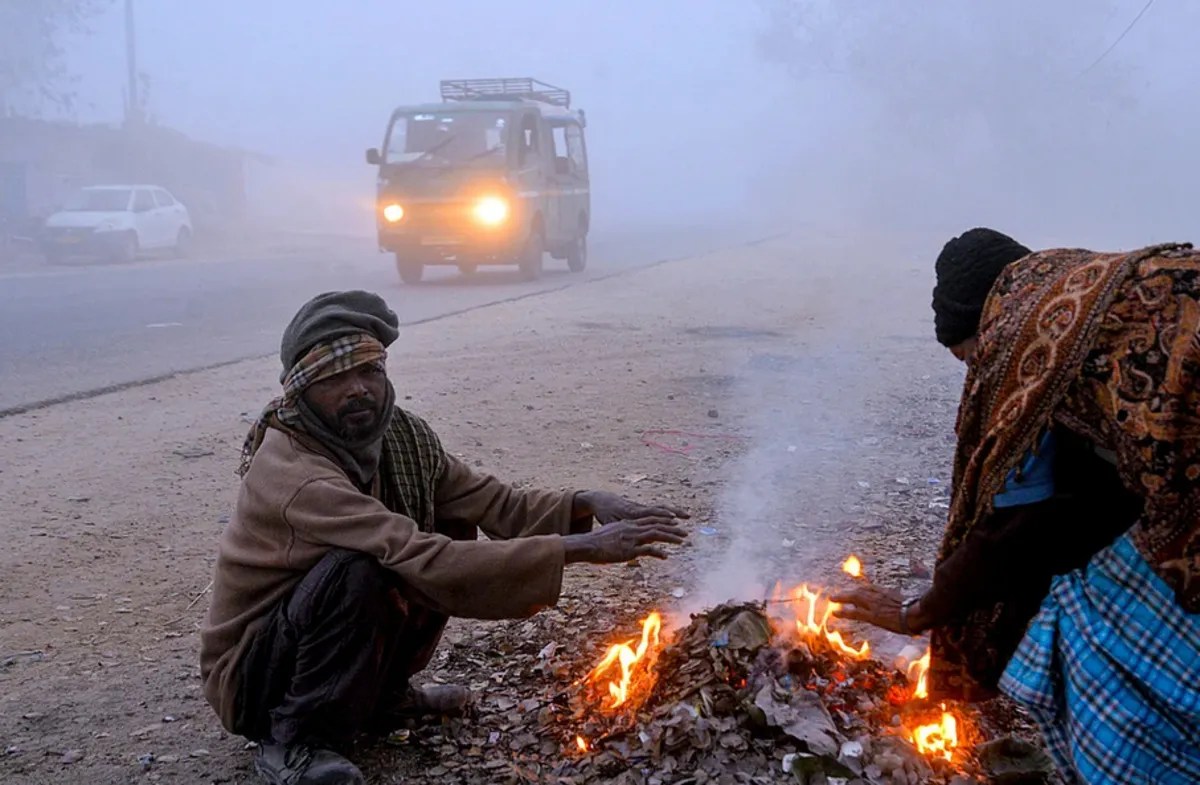
IMD Cold Wave Alert: Severe cold and dense fog disrupted normal life across the northern, central, and eastern parts of the country on Tuesday. Due to a drop of 3 to 5 degrees Celsius in minimum and maximum temperatures, nights in the northern, central, and eastern states have reached freezing point, while the cold is wreaking havoc during the day due to increased chill.
According to the India Meteorological Department (IMD), air, rail, and road traffic have been affected for the past several days due to the drop in minimum and maximum temperatures and low visibility. On Tuesday, the minimum temperature in Delhi was recorded at 12.8 degrees Celsius, while dense fog and a 'poor' AQI (240-350) further exacerbated the situation.
In many districts of Delhi, Punjab, Rajasthan, Madhya Pradesh, and Uttar Pradesh, holidays for primary level classes in schools have been extended, while in some cities, school timings have been changed.
According to the IMD, the cold will intensify in the coming days. Dense fog and cold wave conditions will persist in North-West, Central, and East India for the next 4-5 days, with temperatures potentially dropping by 2-5 degrees Celsius. The situation will be severe in Punjab, Haryana, and Chandigarh from January 6-9, while in Rajasthan, Madhya Pradesh, and Chhattisgarh, it will continue until January 10. Relief may be expected after January 10. Light rainfall and a rise in temperature are possible in some areas due to a Western Disturbance.
In many states, a significant difference is being felt in the temperatures of open areas, especially rural regions, compared to the temperatures recorded in cities via instruments. This is generally not reflected in the records, even though the situation is becoming more severe. The harshness of the cold in rural areas is not only making life difficult but also increasing the apprehension of crop damage due to frost at night.
Big News
View AllNational News
Trending