24 October 2026,
Saturday

24 October 2026,
Saturday
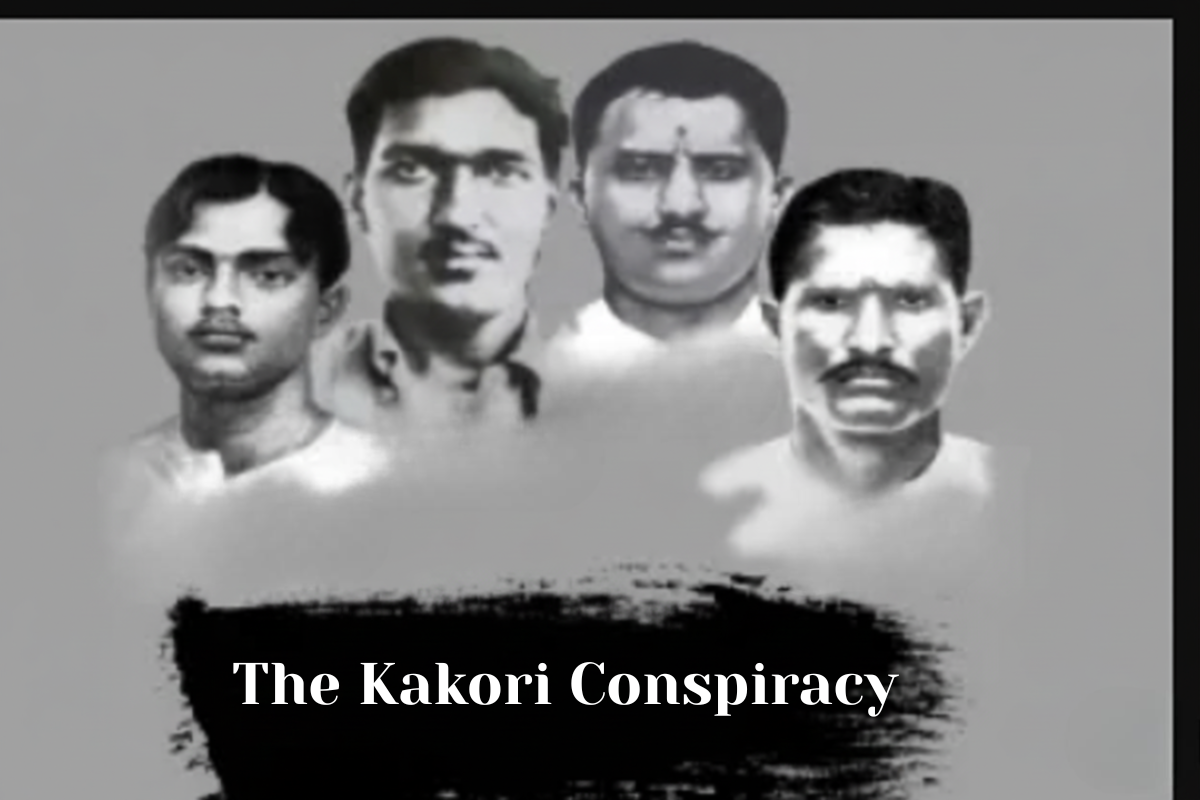
The Kakori Incident (Image: Patrika)
Kakori Conspiracy / Martyrs of Kakori: Today marks 98 years since the martyrdom of Ram Prasad Bismil, Ashfaqulla Khan, and Roshan Singh. On December 19, 1927, Ram Prasad Bismil, Ashfaqulla Khan, and Rajendranath Lahiri were sentenced to death for carrying out the Kakori incident.
Ram Prasad Bismil: The Kakori incident was executed by Jogeshchandra Chatterjee, Premkrishna Khanna, Mukundi Lal, Vishnusharan Dublish, Sureshchandra Bhattacharya, Ramkrishna Khatri, Manmathnath Gupta, Rajkumar Sinha, Thakur Roshan Singh, Ramprasad 'Bismil', Rajendranath Lahiri, Govindcharan Kar, Ramdulare Trivedi, Ramnath Pandey, Shachindranath Sanyal, Bhupendranath Sanyal, and Pranvesh Kumar Chatterjee. A case was filed against them under several sections. The photograph below does not feature Ashfaqulla Khan.
98 Years of Kakori incident: Rajendra Lahiri was hanged on December 17, 1927, while two days later, Ram Prasad Bismil, Ashfaqulla Khan, and Roshan Singh were sentenced to death. Meanwhile, Chandrashekhar Azad shot himself while fighting the British.
Professor Shamsul Islam states that people mistakenly believe that the revolutionaries associated with the Hindustan Republican Association (HRA) were in dire financial straits and lacked even basic clothing. He quotes Sudhir Vidyarthi, saying, 'It is important to remember that the objective behind looting the government treasury was not to purchase weapons and ammunition, but to establish a printing press to publish socialist literature and disseminate it among the youth, labourers, farmers, and intellectuals.'
Kakori is a small railway station located 17.5 kilometres from Lucknow in Uttar Pradesh. Ram Prasad Bismil planned the train robbery. He selected nine revolutionaries for this task. Besides him, Rajendra Lahiri, Roshan Singh, Sachindra Bakshi, Ashfaqulla Khan, Mukundi Lal, Manmathnath Gupta, Murari Sharma, Banwari Lal, and Chandrashekhar Azad were involved in this mission.
Ram Prasad Bismil wrote in his autobiography, 'The coolie was unloading iron chests kept in the guard's compartment. They had neither chains nor locks. It was on that day that I decided this is what I have to loot.' The revolutionaries decided not to harm any passengers travelling on the train. The revolutionaries had set August 8, 1925, as the date for this operation, but they managed to reach the station only 10 minutes after the train had departed.
After failing to succeed in their plan on August 8, they decided to carry out the operation on August 9. The next day, they boarded the train with four Mauser pistols and a revolver and got on the 8 Down route from Lucknow to Shahjahanpur. At Kakori, they pulled the train's chain and unloaded the iron box. This box contained only ₹4600.
Following the Kakori conspiracy, the British government relentlessly pursued the revolutionaries. Sections 121A, 120B, and 396 of the Indian Penal Code were applied to those involved in this incident. The British government sentenced Ramprasad Bismil, Rajendra Lahiri, Roshan Singh, and Ashfaqulla Khan to death on charges of sedition and conspiracy. Before being hanged, Bismil said, 'I wish downfall of British Empire.' He also shouted slogans of 'Down with Imperialism' and 'Down with the British Government.' The revolutionaries, who sacrificed their lives for the country, believed that the British rule was heading towards tyranny and that they had to end this dictatorial system.
Sudhir Vidyarthi writes in his book 'Ashfaqullah and His Era,' 'Ashfaq's request to the Communist group is that when you have come to India with this movement from abroad, you consider yourselves foreigners. You hate indigenous things, you are fond of foreign attire and lifestyle. This will not work; come back to your true colours. Live for the country, die for the country. I agree with you considerably and would say that my heart has always ached for the poor farmers and suffering labourers.'
Sudhir writes, 'Even during my period of hiding from the police, I often cried seeing their plight because I had the opportunity to spend days with them. If it were up to me, I would dedicate everything in the world for them. The splendour of our cities is because of them. Our factories are populated and functioning because of them. It is their hands that draw water from our pumps. In short, every work in the world happens because of them. Poor farmers toil in the fields amidst torrential monsoon rains and the scorching heat of Jeth-Baisakh, producing the food we consume. It is absolutely true that they do not get a share of what they produce, what they make. They always remain unhappy and impoverished. I agree that our white masters and their agents are responsible for all these things.'
Ram Puniyani, a former professor of Biomedical Engineering at IIT Bombay and currently the Chairman of the Executive Council of the Centre for Study of Society and Secularism (CSS), agrees with the revolutionaries' views, stating that British rule meant tyranny. British rule meant the end of a democratic system. For the past decade, the BJP has also been ruling with dictatorial tendencies, actively engaged in destroying democratic values.