24 August 2026,
Monday

24 August 2026,
Monday
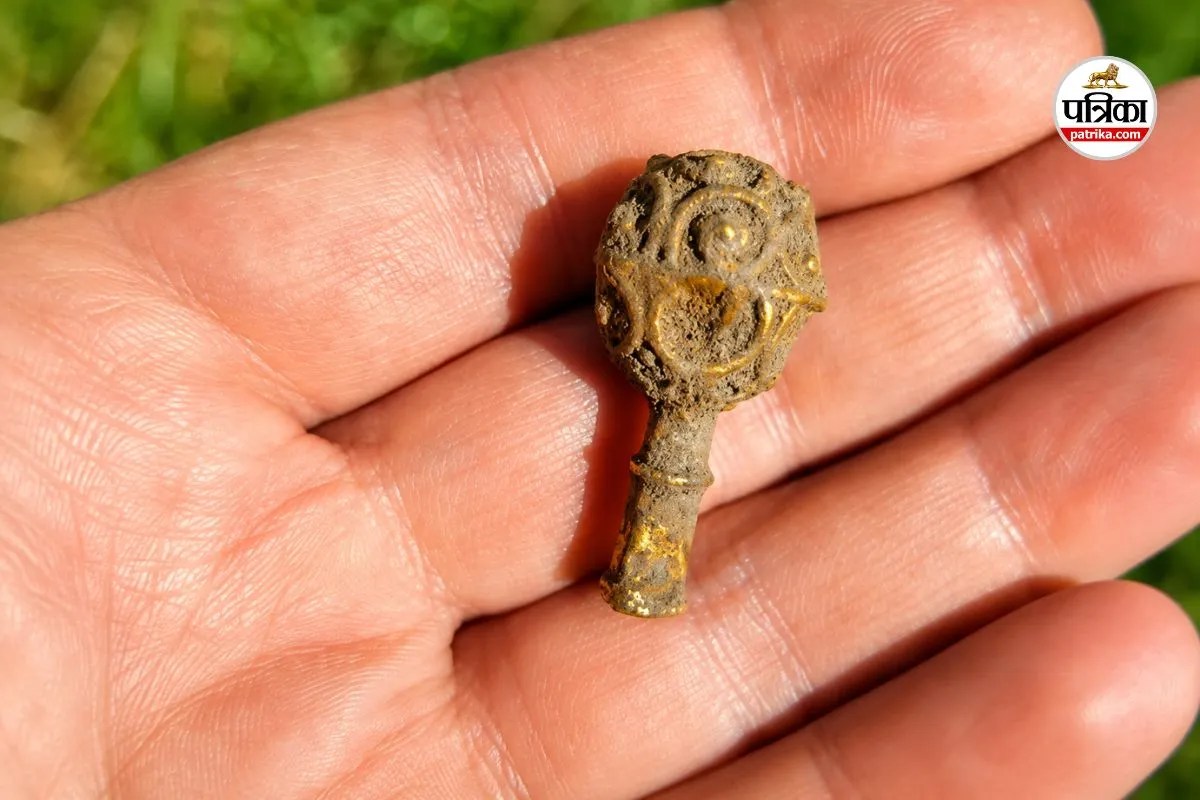
1200 Year Old Gold Discovery: 20 Year Old Girl Unearths Gold for the First Time, Uncovering a 1,200 Year Old Secret After 90 Minutes (Photo Source: @Rainmaker1973)
For an archaeology student, finding a significant artefact during a first excavation can be a once-in-a-lifetime experience. That is exactly what happened to 20-year-old Yara Souza, who travelled from the US to Britain. Just 90 minutes after beginning an excavation in Northumberland, she found a small golden artefact that is believed to be around 1,200 years old. The discovery has prompted researchers to reconsider the role of religious activity, the elite and ancient routes in medieval Britain.
Yara Souza, a student at Newcastle University, was carrying out an archaeological excavation with other students in the Redesdale area of Northumberland. Around an hour and a half after the excavation began, she found a small golden artefact beneath the ground.
The object is about 1.5 inches long and features a decorative design, with a distinctive finial at one end. Based on initial studies, experts believe it dates to around the 9th century, during the early medieval period in Britain.
As this was Souza's first excavation, finding a gold object more than 1,000 years old so soon after starting was an extraordinary experience for her.
Archaeologists say gold was beyond the reach of ordinary people in 9th-century Britain. Objects made from precious metals were generally associated with wealthy and influential members of society.
Researchers believe the artefact may have been associated with a religious or ceremonial activity. Its decorative appearance also suggests that it was not made for ordinary domestic use.
However, its exact purpose has not yet been established. Scientists and archaeologists will carry out further research into its composition and manufacturing technique and compare it with other artefacts found in the surrounding area.
The discovery is particularly significant because a similar gold object was previously found in the Redesdale area. In 2021, metal detectorist Alan Gray discovered another gold artefact there.
The similarities between the two objects have attracted the attention of experts. Researchers are examining whether both artefacts were part of a larger historical context.
Archaeologists are also considering whether the objects were deliberately hidden or buried. If further research establishes this, the finds could provide important clues about religious beliefs, practices surrounding the concealment of possessions and social life at the time.
Redesdale's importance extends beyond the gold objects. The area is close to Dere Street, an important Roman route.
Dere Street was developed by Roman soldiers to strengthen their activities and administration in northern Britain. The route connected the York area of modern England with the Firth of Forth area in Scotland.
The route did not become completely irrelevant after Roman rule ended. The latest discovery suggests that old routes continued to be used centuries later for trade, travel, religious activities and the movement of influential people.
Another important link for experts is Dere Street's connection with major religious centres such as Jedburgh and Hexham. Both places have centuries-old Christian histories, with religious institutions and churches developing there between the 7th and 9th centuries.
This means the possibility that the gold artefacts were connected to religious activity in the Redesdale area cannot be ruled out. Newcastle University archaeologist James Gerrard said Dere Street remained an important route even after Roman rule ended. The latest discovery suggests that people of high social status also used the route.
For Souza, the discovery was particularly meaningful because she had previously been unable to take part in an important archaeological excavation.
She had missed the excavation at the Birdoswald Roman fort, linked to Hadrian's Wall, because of illness. The discovery at Redesdale has helped ease that disappointment.
For her, one of the most exciting aspects of the discovery was that the object she brought out of the soil may not have been seen by a human being for more than 1,000 years.
The two gold artefacts discovered at Redesdale will undergo further scientific and archaeological examination. They are then planned to be displayed at the Great North Museum: Hancock.
The project also brings together university archaeology students, experts and metal detectorists. Researchers believe collaboration between professional archaeology and responsible metal detecting can help uncover previously untold stories from the past.
The small piece of gold found during Yara Souza's first excavation may be tiny, but the questions surrounding it are significant. Was it part of a religious ritual? Was it used by an elite individual? And is it directly connected to the second object found in 2021?
The answers will emerge through further research. For now, the artefact buried in the soil for around 1,200 years has opened a new window into Britain's early medieval history.