2 April 2026,
Thursday


2 April 2026,
Thursday
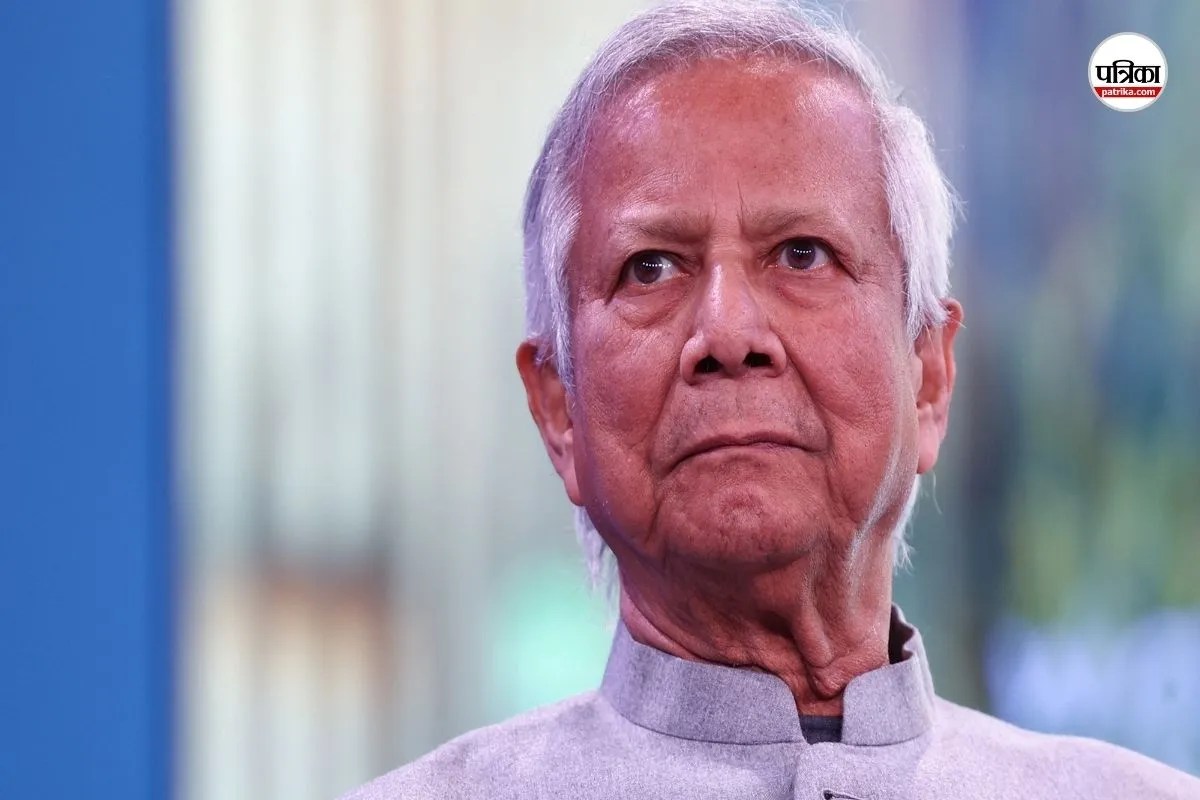
Muhammad Yunus (Image: ANI)
Bangladesh Violence: Amidst recent violence in Bangladesh, attacks on Hindus, arson, and escalating unrest, discussions about the rise of anti-India forces have intensified. In this context, a significant statement from Bangladesh's interim government's finance advisor, Salehudin Ahmed, has sparked new hope for India-Bangladesh relations.
Salehudin Ahmed clarified that the Chief Advisor of the interim government, Professor Muhammad Yunus, is actively working to mend strained relations with India. He stated that Yunus's focus is on developing strong economic ties with India, moving beyond political rhetoric.
Speaking to journalists after a meeting of the advisory council committee on government procurement, Salehudin Ahmed said, "The Chief Advisor is continuously working towards improving diplomatic relations with India. He has discussed this matter with several relevant parties." However, when asked if Professor Yunus had directly engaged with Indian government officials, Ahmed clarified that this had not happened, but influential individuals connected to the issue had been contacted.
The finance advisor explicitly stated that Bangladesh's trade policy is not influenced by political ideologies. He gave an example: "If importing rice from India is cheaper than from Vietnam or any other country, then economically, it makes sense to purchase from India." He informed that Bangladesh's interim government recently approved a proposal to import 50,000 tonnes of rice from India, which he described as a significant step towards better relations between the two countries.
According to Salehudin Ahmed, importing rice from Vietnam incurs an additional cost of approximately 10 Taka (about 0.082 US dollars) per kilogram. Therefore, purchasing rice from India is more profitable for Bangladesh's economy. He added that this decision was made entirely keeping in mind national interest and economic benefits.
Political analysts believe that India-Bangladesh relations are currently at their lowest point since Bangladesh's separation from Pakistan in 1971. Reports of diplomatic tensions, summoning of ambassadors, and protests have been consistently emerging from both countries. However, Salehudin Ahmed dismissed these apprehensions, stating, "Although the situation may appear very bad from the outside, the reality is not that serious."
The finance advisor acknowledged that some statements are difficult to ignore but also clarified that these statements do not represent the national sentiment of Bangladesh. Regarding the role of external forces in inciting anti-India sentiments, he said, "We do not want any bitterness between the two countries. If any external power is trying to escalate tensions, it is neither in India's interest nor in Bangladesh's."
Salehudin Ahmed reiterated that Bangladesh's interim government is committed to maintaining cordial and balanced relations with India. He stated that all economic decisions of the government will be based entirely on national interest and practical benefits, not on emotional or political pressure.
Big News
View AllWorld
Trending