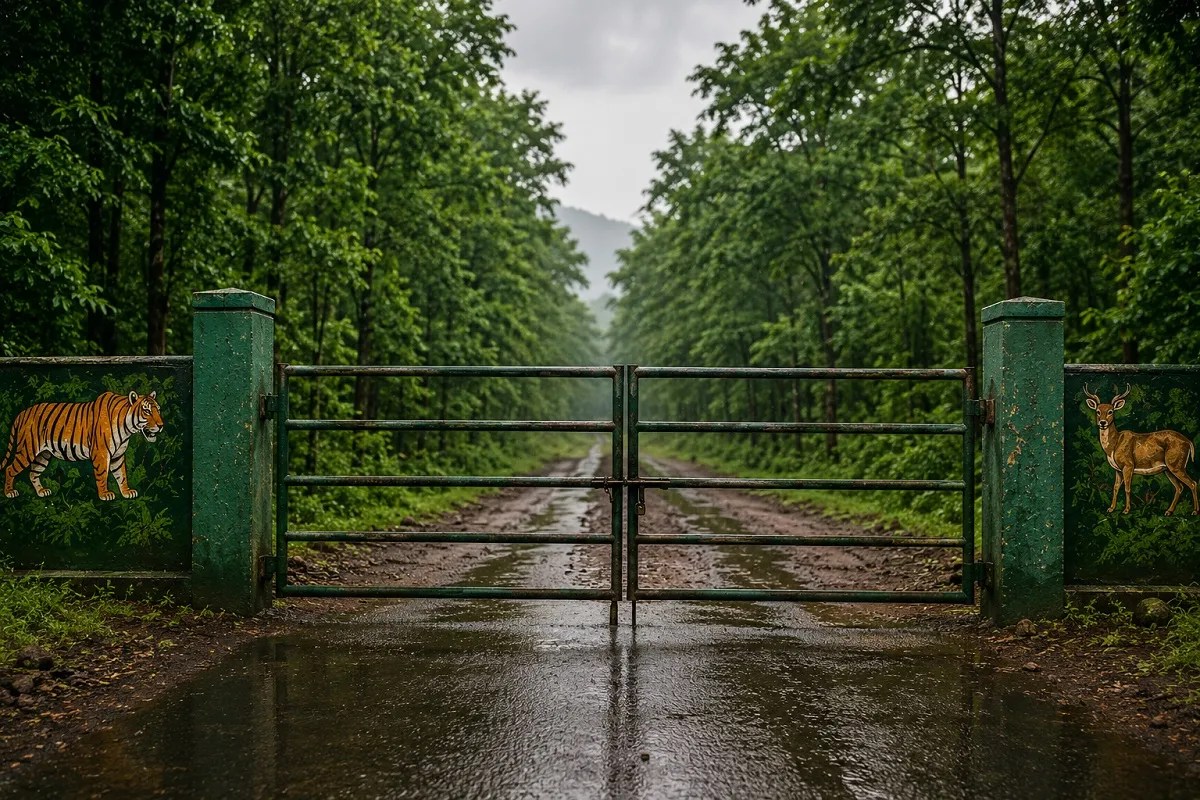
Chhattisgarh closes all tiger reserves, national parks & sanctuaries to tourists for 3 months from June 15 to Oct 1 due to monsoon. Read more.

Chhattisgarh's tiger reserves, national parks, and sanctuaries will be closed to tourists for three months, from June 15 to October 1. During this period, entry into the forests will not be permitted. The forest gates will reopen on October 2, coinciding with the start of Wildlife Protection Week. This closure is implemented every year due to the breeding season of wildlife during the rainy season and the adverse forest conditions caused by monsoon rains. PCCF and Head of Forest Force Arun Pandey stated that tiger reserves, national parks, and sanctuaries are shut down every year ahead of the monsoon.
Monsoon Forest Closure: A Rule Applied Every Year
PCCF and Head of Forest Force Arun Pandey explained that forest conditions become extremely sensitive during the monsoon. Heavy rainfall makes dirt tracks, rivers, streams, and forest paths dangerous, posing a risk to tourist safety as well. For this reason, tiger reserves, national parks, and sanctuaries are temporarily closed every year. He noted that this arrangement is not only meant to halt tourism but is also crucial from a wildlife conservation standpoint. During this time, animals get a calm environment, ensuring their breeding period remains undisturbed.
Forests to Reopen on October 2
The forest department has also clarified that after remaining closed until October 1, all national parks and tiger reserves will reopen to tourists starting October 2, marking the beginning of Wildlife Protection Week. Following this, tourists will once again be able to enjoy jungle safaris and wildlife sightings.
An Important Decision for Both Environment and Safety
Experts believe that keeping forests closed during the monsoon is not only essential for the safety of wildlife but also helps maintain ecological balance. During the rainy season, forests can experience conditions like slippery paths, flooding, and landslides, which can pose risks to tourists.
Impact on Tourism, but Conservation Remains the Priority
While this decision affects the state's tourism industry for a short period, the forest department maintains that wildlife conservation is always the top priority. Every year, thousands of tourists visit Chhattisgarh's famous tiger reserves and national parks, but the monsoon break is considered necessary to keep this experience safe and well-organised. The Chhattisgarh government's move is being seen as an important initiative toward environmental protection, wildlife safety, and sustainable tourism development.