24 August 2026,
Monday

24 August 2026,
Monday
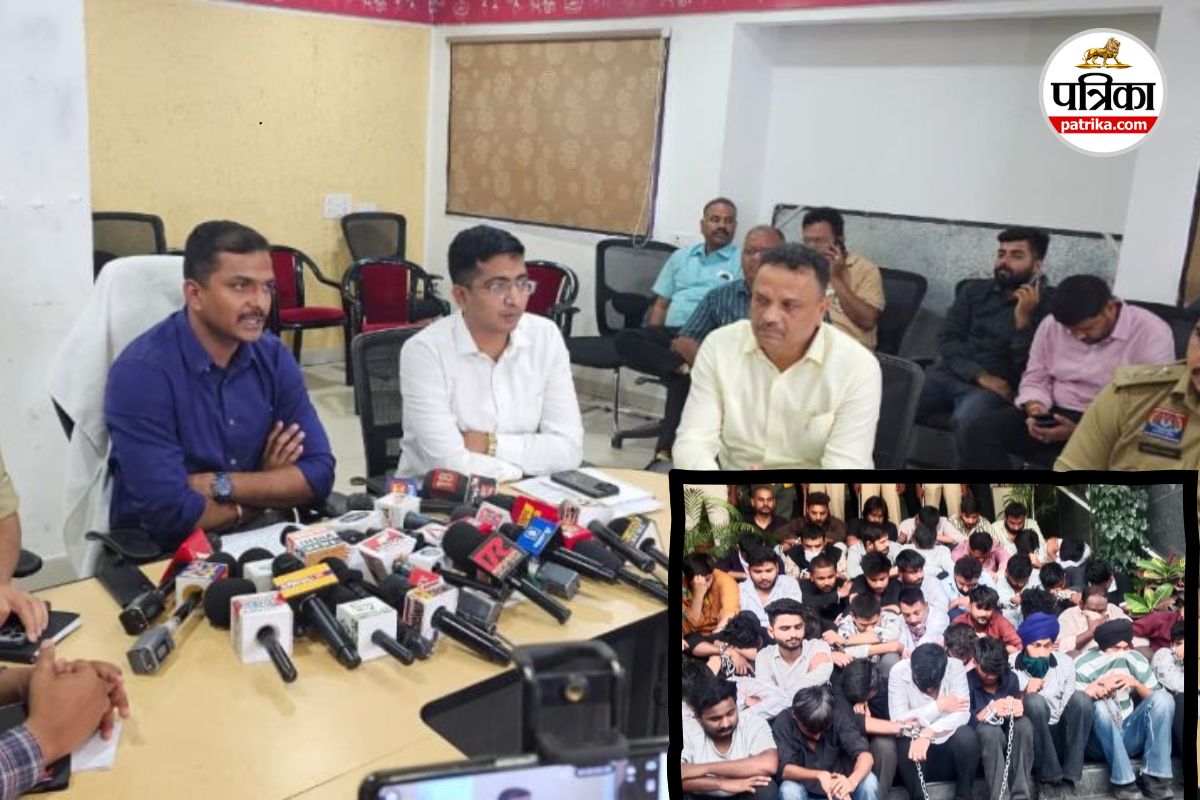
International cyber fraud busted (Photo source: Patrika)
Online Fraud: The Police Commissionerate in the capital has busted a large international cyber fraud network. In an intelligence-based operation, three illegal call centres were raided simultaneously, leading to the arrest of 42 accused. The accused were found in possession of 67 mobile phones, 18 laptops, 28 computers, and 3 Wi-Fi routers.
Investigations revealed that this gang primarily targeted citizens of the United States, defrauding them under the guise of providing loans and improving credit (CIBIL) scores. Over the past two years, this network is estimated to have defrauded individuals of more than ₹50 crore.
The gang's first step was to collect data of foreign nationals, particularly those who had applied for loans. This information was purchased or gathered through social media platforms and mail groups. Subsequently, call centre employees would contact them via internet calling and build trust by conversing according to a script.
In the second stage, victims were informed that their credit score was poor, hence their loan could not be approved. They were then convinced that their company could improve the score. During this process, the victim's banking and personal information was obtained.
The gang's technical team would display a small amount (e.g., $100) in the victim's account using a cloned cheque. Exploiting bank processing times, the amount would appear temporarily in the account, thereby gaining the victim's confidence. Foreign networks, particularly those connected to China, were also involved in this technical aspect.
Once the victim saw the amount in their account, the fraudsters would claim it was a test deposit and needed to be returned. They would then request payment via gift cards.
The accused would immediately convert the codes of the gift cards purchased by the victim into cash. This money was then sent to India through hawala channels, eventually reaching the main kingpin.
The gang also sent fake legal notices and arrest warrants to intimidate victims. Threats of legal action for non-payment would be made, causing many to panic and pay immediately.
While the network was being operated from the capital, its mastermind was based in Gujarat, and technical support was provided from abroad. The gang included young men from seven states in the country—Gujarat, Uttar Pradesh, Bihar, Rajasthan, Meghalaya, Haryana, and Punjab. The three call centres were managed by different supervisors. The major operation, which exposed an organised international cyber fraud network, was carried out based on secret information received by the police on March 25.