8 January 2026,
Thursday


8 January 2026,
Thursday

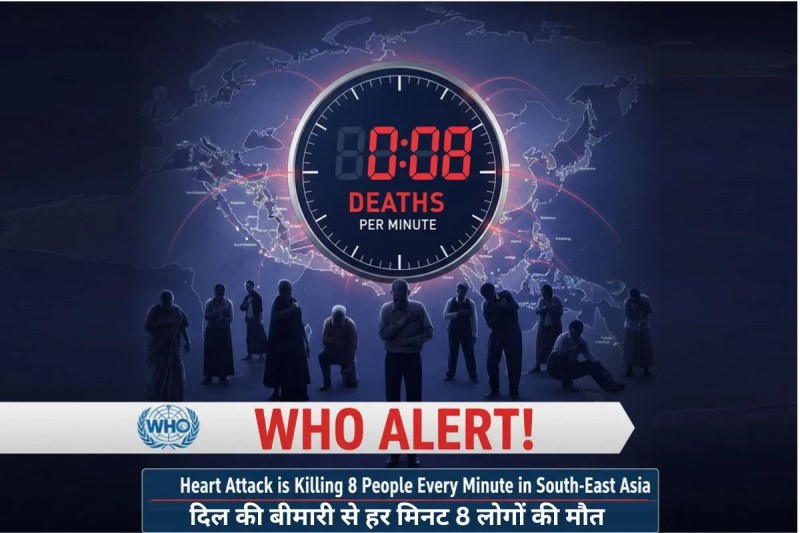
Heart attacks kill 8 people every minute (Photo Source: AI image @Gemini)
World Heart Day 2025: The World Health Organisation (WHO) stated on Saturday, ahead of World Heart Day, that heart disease is the leading cause of death in South-East Asia, claiming eight lives every minute.
World Heart Day is observed every year on 29 September to raise awareness about heart diseases and to highlight the importance of early detection in saving and improving lives. This year’s theme is “Don’t Miss a Beat.”
Dr. Catharina Bohme, Officer-in-Charge of WHO South-East Asia, said, "Every minute, 8 people die from cardiovascular diseases (CVDs) in the WHO South-East Asia Region. Heart disease is a leading cause of death in the region, with half of those deaths occurring prematurely, before the age of 70."
Key risk factors for heart disease include high blood pressure, diabetes, tobacco use, alcohol consumption, unhealthy diets rich in salt and fat, and physical inactivity.
Several major risk factors are responsible for the rising cases of heart disease, with our unhealthy lifestyles being at the forefront. Dr. Bohme outlined five main reasons:
High Blood Pressure and Diabetes: This is a major concern, as over 85% of individuals with high blood pressure and diabetes in the region have their conditions uncontrolled.
Tobacco and Alcohol Consumption: Both act as poisons to heart health.
Unhealthy Diet: Foods high in salt and fat are blocking our arteries.
Physical Inactivity: Lack of exercise or sedentary habits are also contributing to heart disease.
Increasing Urbanisation: Population growth and rapid urbanisation are placing immense pressure on health systems that are already struggling with resource constraints.
Boheme stated, "85% of people suffering from high blood pressure and diabetes in the region have their conditions uncontrolled."
She further added that with a growing population and increasing urbanisation, susceptibility to heart diseases is rising, putting pressure on health systems that are already grappling with limited resources.
The expert noted that policy measures and clinical interventions by countries over the past two years have shown encouraging progress.
Boheme said, "By June 2025, public health facilities are providing protocol-based management to over 90 million people suffering from high blood pressure and diabetes."
She also mentioned shortcomings such as inadequate financial and regulatory measures, weak enforcement of policies, and poor monitoring of marketing, packaging, and advertising restrictions on unhealthy products, which hinder progress.
Emphasising the need for increased public awareness, she called for a whole-of-society approach to tackle heart diseases.
Bohme said, "For individuals, quitting tobacco, reducing salt intake, daily physical activity, and stress management are crucial steps towards a healthy heart. For governments and policymakers, implementing salt reduction measures, removing industrially produced trans-fats from the national food supply, and enforcing comprehensive tobacco control laws should be among their top priorities."
Big News
View AllHealth
Trending
Lifestyle