13 October 2026,
Tuesday

13 October 2026,
Tuesday
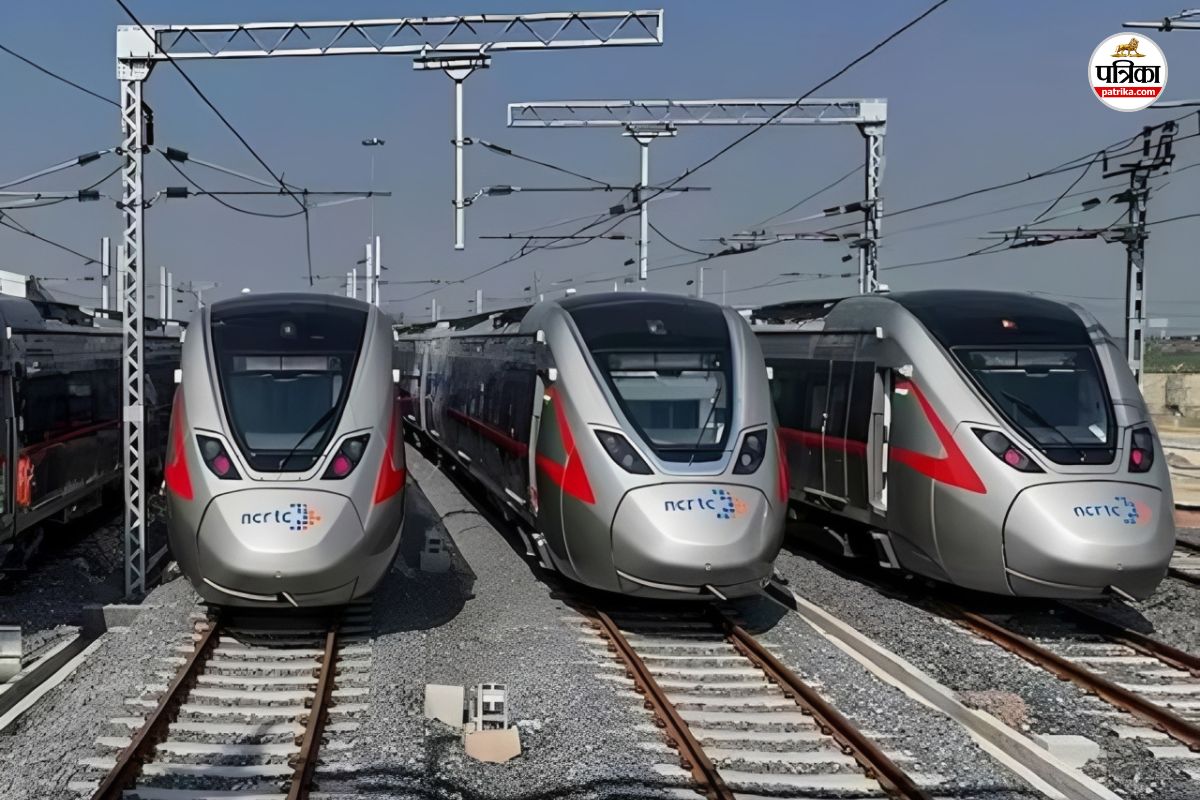
Rajasthan to connect directly to Namo Bharat high-speed rail network. Photo: AI generated
Jaipur: The Regional Rapid Transit System (RRTS) project has gained significant momentum following a consensus reached between the governments of Rajasthan and Haryana. With this development, Rajasthan will now connect directly to the 'Namo Bharat' high-speed rail network, making travel between Delhi and Alwar exceptionally fast and safe. Major industrial areas within the National Capital Region (NCR), including Bhiwadi and Neemrana in Rajasthan, are set to benefit immensely, whilst new avenues for investment and employment will also be created.
Originating from Sarai Kale Khan in New Delhi, the Delhi-Gurugram-SNB-Alwar corridor will pass through Munirka, Aerocity, Gurugram, and Bawal before reaching Shahjahanpur, Neemrana, and Behror (SNB), and moving onward to Khairthal and Alwar. The second phase of the project will extend from Neemrana and Behror down to Sotanala in Kotputli.
Under the first phase of the NCR’s 'Integrated Transport Plan', three primary corridors—Meerut, Alwar, and Panipat—are being developed. The entire project proposes a 196-kilometre-long network featuring 22 main stations, with the Delhi-Meerut route already operational. Within Rajasthan's territory, the project will cover a total length of 91 kilometres, where six stations will be built. Trains on this dedicated track will run at a speed of 160 kilometres per hour.
The standout feature of the Namo Bharat network is its complete interoperability, guaranteeing passengers a seamless journey. All three corridors will converge at New Delhi’s Sarai Kale Khan station, allowing commuters to travel from one corridor to another without the hassle of changing trains.
The trains will operate on fully dedicated and elevated tracks, ensuring that road traffic and congestion have zero impact on transit times. Furthermore, this entire network will be heavily interlinked with Indian Railway stations, Inter-State Bus Terminals (ISBTs), airports, and the Delhi Metro grid.
The RRTS represents a cutting-edge model of public transport that is far more advanced than a standard metro system. While metros primarily operate within a single city, the RRTS connects different cities and states.
Its operational speed is approximately three times faster than that of a conventional metro, which will save a tremendous amount of time for long-distance daily commuters. This corridor will not only make commuting across the NCR effortless but will also herald a new era of industrial growth and infrastructure development in Rajasthan.