28 August 2026,
Friday

28 August 2026,
Friday
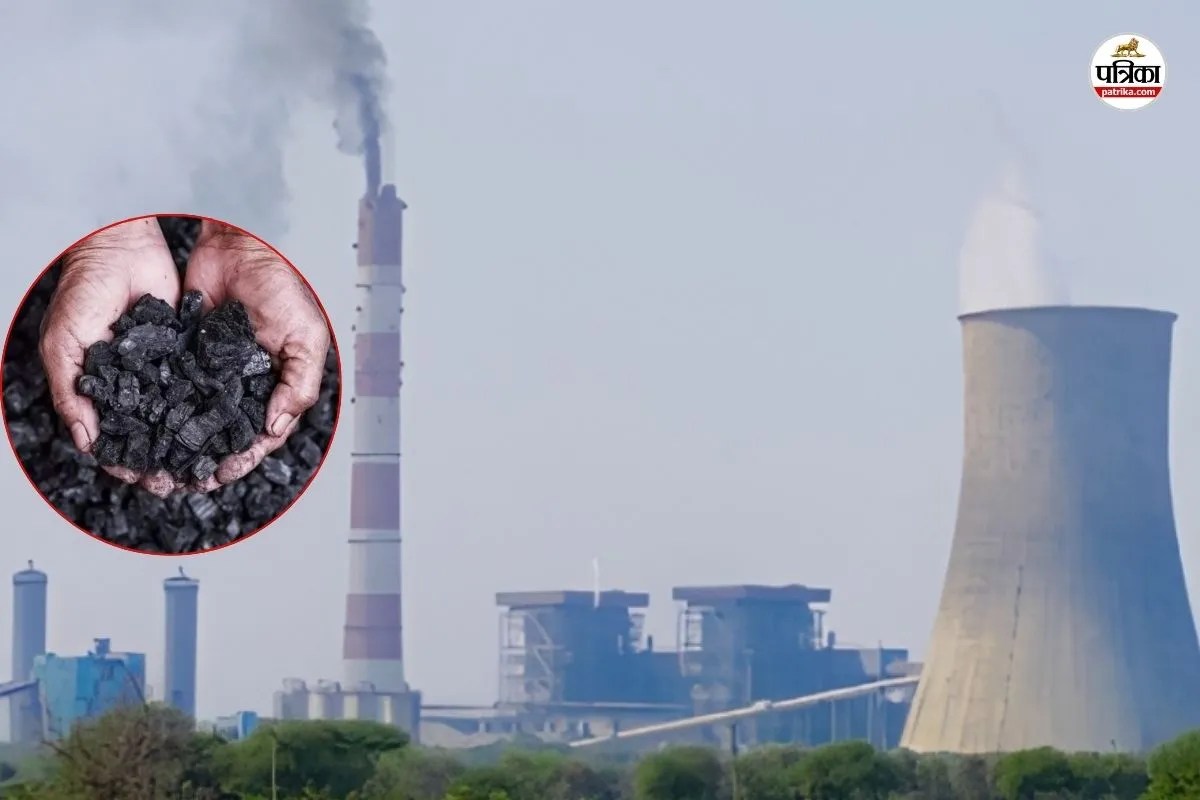
Coal crisis in Rajasthan. Photo: Patrika
Jaipur: The coal crisis at the country's power stations is deepening once again. Of the country's 190 thermal power stations, 45 have seen coal stocks fall to a critical level, with 25 per cent or less of the required stock remaining. Rajasthan's thermal power stations have not been spared this crisis either. Across the seven thermal power plants run by Rajasthan Rajya Vidyut Utpadan Nigam Limited, only 23 per cent of the prescribed normative stock remains on average. Of these, five plants have already reached the critical category.
The average coal stock at the country's thermal power stations is around 50 per cent, while at Rajasthan's seven government-run plants it stands at less than half of that figure. The biggest concern is the widening gap between coal arriving and coal being consumed. On 26 August, around 74,000 tonnes of coal reached these seven power stations, while consumption on the same day stood at around 93,000 tonnes — roughly 19,000 tonnes more was consumed than arrived in a single day.
26% of Normative Stock Available at Kota
Kota Thermal Power Plant has 26 per cent of its normative stock remaining. Production is currently shut at Unit No. 3 and Unit No. 6. Prior to this, Unit No. 5 had also been shut for several days in July. According to officials, the two units are shut for maintenance, but the plant's coal stock has also come very close to the critical level. Kota Thermal requires around 3.91 lakh tonnes of coal as its normative stock, while the available stock is just 1.01 lakh tonnes — only one per cent above the critical threshold.
Situation Also Serious at Kalisindh
The 1,200 MW Jhalawar Kalisindh Thermal Power Station has a normative coal stock requirement of around 3.36 lakh tonnes, but currently only 69,000 tonnes of coal is available. The stock has fallen to 21 per cent. On 26 August, 12,000 tonnes of coal arrived at the plant while 15,000 tonnes was consumed on the same day. Additional Chief Engineer Mahmood Ahmed said that only a week's worth of coal remains at present. A unit had to be shut for some time on Thursday owing to a feeder fault.
A Fifth of the Standard Stock
The seven plants have a combined power generation capacity of 7,580 MW. Based on an 85 per cent plant load factor, their daily coal requirement is around 1.04 lakh tonnes. Their normative stock is fixed at around 21.87 lakh tonnes, but the actual stock is only 5.04 lakh tonnes.
Where How Much Coal Remains
Less Coal Arriving Than Demand
Chhabra Thermal Plant's Chief Engineer D.K. Mittal said around six days' worth of coal remains. Demand has risen, but coal supply is currently low. Chhabra Super Critical's Chief Engineer K.C. Singhal said the plant is getting less coal than required, and additional rakes are not arriving. Kota Thermal Plant's Chief Engineer Shikha Agarwal said coal supply has reduced due to rain, but stock is currently sufficient; Unit No. 3 and Unit No. 6 remain shut.
Blast in Boiler
A powerful blast occurred in the boiler furnace of Unit No. 1 at the Kalisindh Thermal Power Plant in Jhalawar district on Thursday evening. The unit was shut down immediately after the blast. According to initial information from the unit, the plant has suffered heavy financial loss as a result of the incident. However, there are no reports of any casualties. It is being said that the unit had for a long time been receiving supplies of wet and poor-quality coal, which is suspected to be behind the blast in the boiler furnace. Panic broke out among staff working in the unit after the blast. The unit was shut down for safety reasons.