13 May 2026,
Wednesday


13 May 2026,
Wednesday
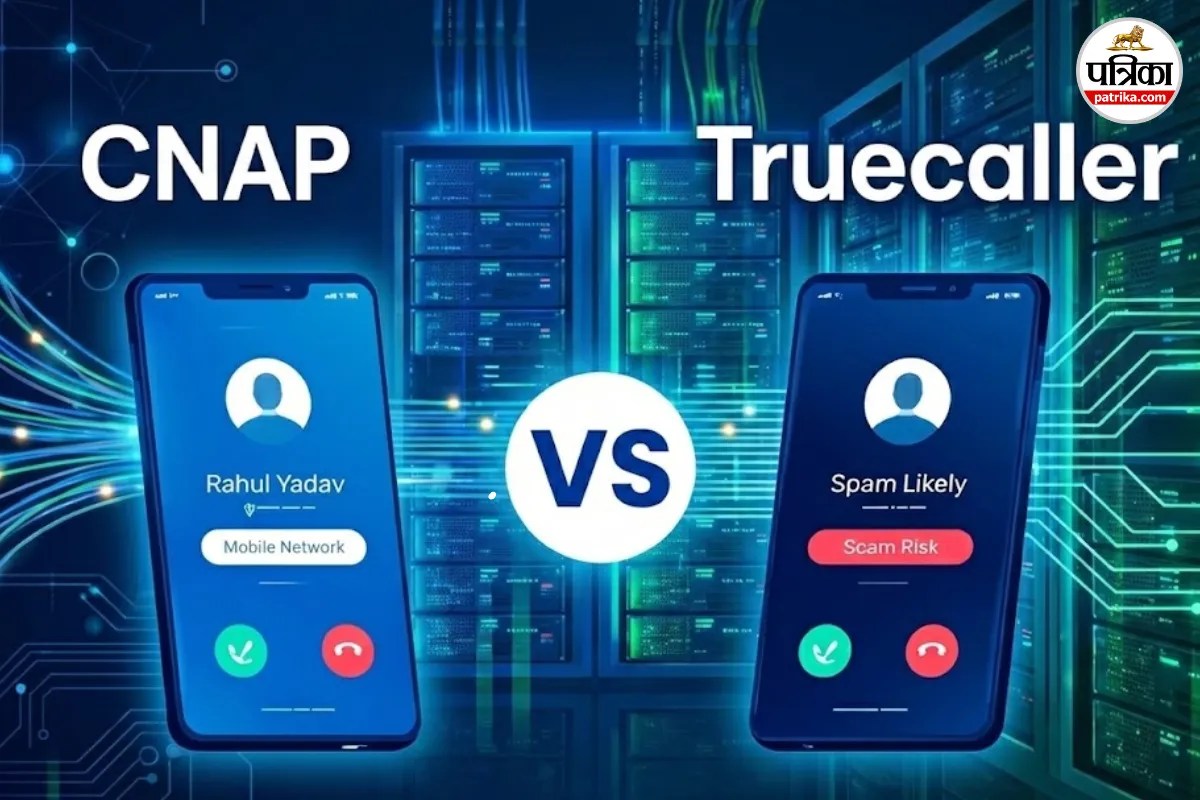
CNAP vs Truecaller (Image: Gemini)
Whenever the phone rings and an unknown number appears on the screen, we search the caller Id on Truecaller. We have become accustomed to checking who is calling. But, have you ever noticed that sometimes the name displayed is a bit strange?
This happens because until now, we were relying on hearsay. But now, the Indian government is set to change this game. The government is introducing a technology that will display a verified identity from government documents on your screen, rather than raw information.
Let's understand in simple terms what this new system is and whether you should uninstall Truecaller from your phone after its arrival.
The government and the Telecom Regulatory Authority of India (TRAI) are jointly introducing a feature called CNAP (Calling Name Presentation). You can call this a government caller ID. Until now, caller ID only displayed the number, but with CNAP, whenever your phone rings, the network will immediately check whose name the SIM is registered under. The name provided in Aadhaar card or KYC documents at the time of SIM acquisition will be displayed on your screen. This means if a fraudster calls pretending to be a bank manager, their real name will appear on the screen.
The good news is that you will not need to download any separate app on your phone for this service, nor will it require an internet connection. This will work directly through the network (4G/5G). Currently, it is in the trial phase, and it is expected to be fully functional on every mobile by March 2026.
This is where the real catch lies. You see, Truecaller operates on a workaround known technically as crowdsourcing. This app pulls data from people's phonebooks. If ten people have saved a number as one name, Truecaller will identify that number as the same, even if the number is registered with other name.
On the other hand, CNAP is directly linked to the telecom company's database. It will display the name registered in government records. So, if it's Abc, then the same name will be displayed. This will be a 100% authentic identity.
Now, let's come to the biggest question. Will the need for Truecaller end after the government system arrives? The answer is – not entirely.
If you only want to know the truth: Then CNAP is the best. It is also good for your privacy because it does not upload your contacts to its server.
If you want to avoid spam: Then Truecaller is currently ahead. The government system will tell you the real name, but currently, it lacks the ability to identify if the caller is a scammer, a marketer, or a fraud. Truecaller's red alert, which protects us from fraudsters, is currently missing in the government system.
Overall, the government caller ID (CNAP) is a significant step towards transparency and security. It will make life difficult for those making fake calls. However, until this system incorporates the feature to identify and block spam calls, you might still need to make some space for apps like Truecaller on your phone.
The government has also ensured that if someone wishes to keep their identity private, the option to not display their name will be available under the CLIR (Calling Line Identification Restriction) rules.
Big News
View AllTechnology
Trending