2 January 2026,
Friday


2 January 2026,
Friday

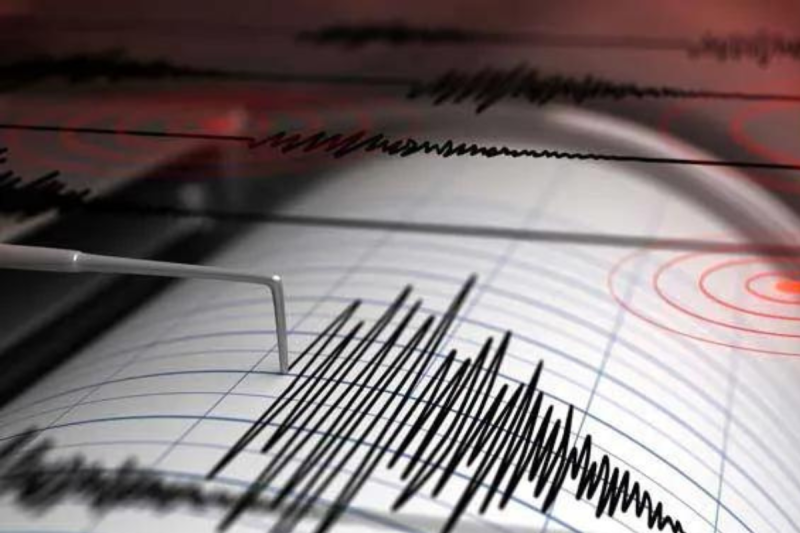
Tremors measuring 3.8 on the Richter scale were felt in Kupwara district, Jammu and Kashmir. According to the National Center for Seismology (NCS), the epicentre was in Kupwara, at a depth of 10 kilometres. People were frightened and rushed out of their homes and offices when the tremors were felt. Fortunately, there were no reports of any casualties or damage.
The tremors were felt at 8:47 PM on Sunday. On the same day, an earthquake of magnitude 2.8 struck Ghaziabad, Uttar Pradesh. The NCS reported that its epicentre was also at a depth of 10 kilometres. Earlier, on 17 February, strong tremors were felt in Delhi-NCR at 5:36 AM. That earthquake was stronger, with its epicentre located 5 kilometres beneath New Delhi. The tremors were so strong that they woke sleeping people and caused panic among those who were awake. Officials say that mild earthquakes occur in this area every two to three years. A 3.3 magnitude earthquake struck the area previously in 2015.
Seismologists say that the Earth's surface is composed of seven large and several smaller tectonic plates. These plates are constantly moving and sometimes collide. Collisions can cause the edges of the plates to bend or break under pressure. When this happens, the accumulated energy below seeks a release, and this energy is what causes an earthquake.
These recent earthquakes clearly indicate that many parts of India are in seismic zones. Areas like Kupwara and Delhi remain at risk of earthquakes.
Big News
View AllBihar Election
National News
Trending