27 October 2026,
Tuesday

27 October 2026,
Tuesday
Gajendra Singh Dahiya
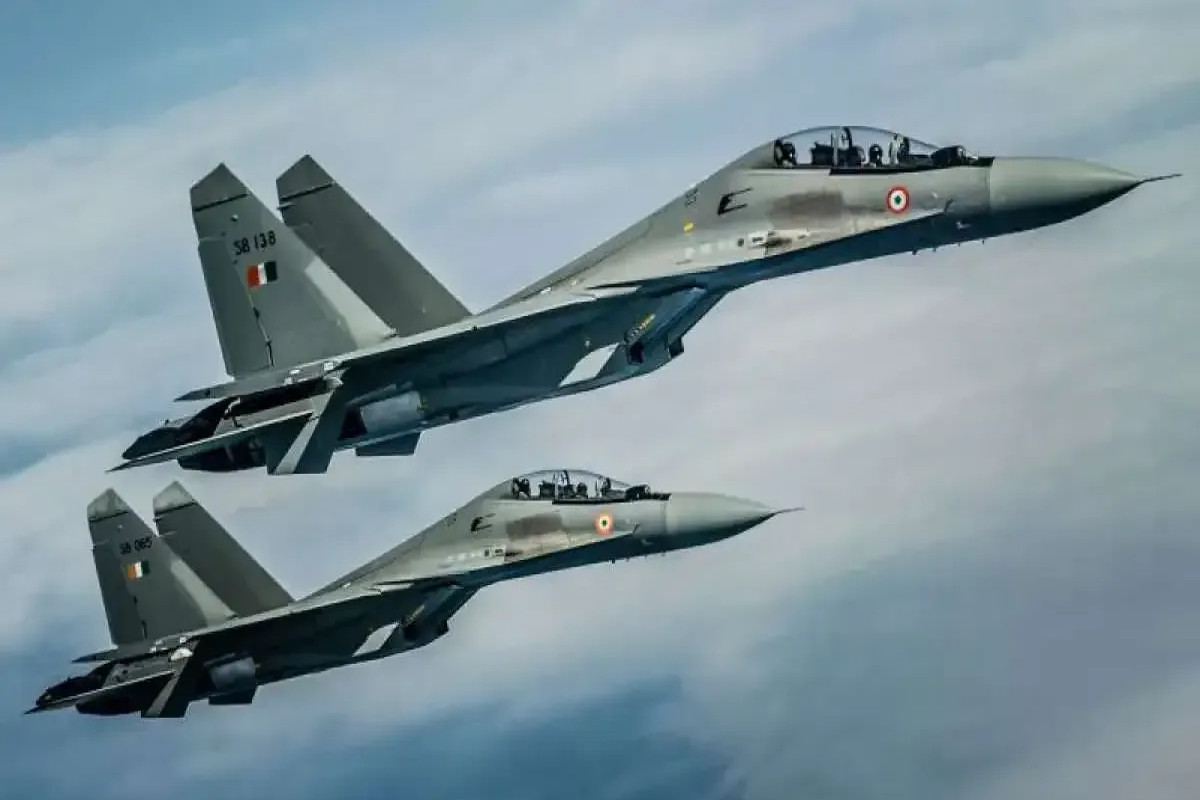
In the near-warlike situation between India and Pakistan, the Sukhoi-30MKI fighter jet emerged as a ‘war hero’ during Operation Sindoor. Being approximately one and a half times larger than other aircraft, including the Rafale, it easily came onto the Pakistani radar system. Despite this, the Sukhoi evaded China's PL-15E beyond-visual-range (BVR) air-to-air missiles and HQ-9BE surface-to-air missiles (SAMs).
The Sukhoi destroyed both missile systems, which constituted Pakistan's biggest air defence. After attacking terrorist bases in Pakistan and PoK on 6 May, the Sukhoi launched a BrahMos missile attack on Pakistan on the morning of 10 May, proving to be a game-changer. This BrahMos strike destroyed three of Pakistan's strategically important airbases. Sources suggest this devastating attack forced Pakistan's DGMO to seek a ceasefire.
Before the arrival of the Rafale, the Sukhoi-30 was India's primary frontline aircraft. While it is a 4th generation fighter jet and the Rafale is a 4.5 generation fighter jet, its electronic warfare capabilities and its ability to change speed and direction in the air have once again established it as a frontline aircraft.
A squadron of Sukhoi-30s is stationed at Jodhpur, a key strategic airbase in western Rajasthan. After the Pulwama attack, Sukhoi aircraft moved from backup airbases to frontline airbases to counter Pakistan. Sukhoi aircraft from Jodhpur airbase played a role in the BrahMos missile attack.
The Indian Air Force, Hindustan Aeronautics Limited, and DRDO may begin a plan next year to upgrade the Sukhoi-30. This will involve installing advanced systems to make it a 4.5 generation aircraft.