2 November 2026,
Monday

2 November 2026,
Monday
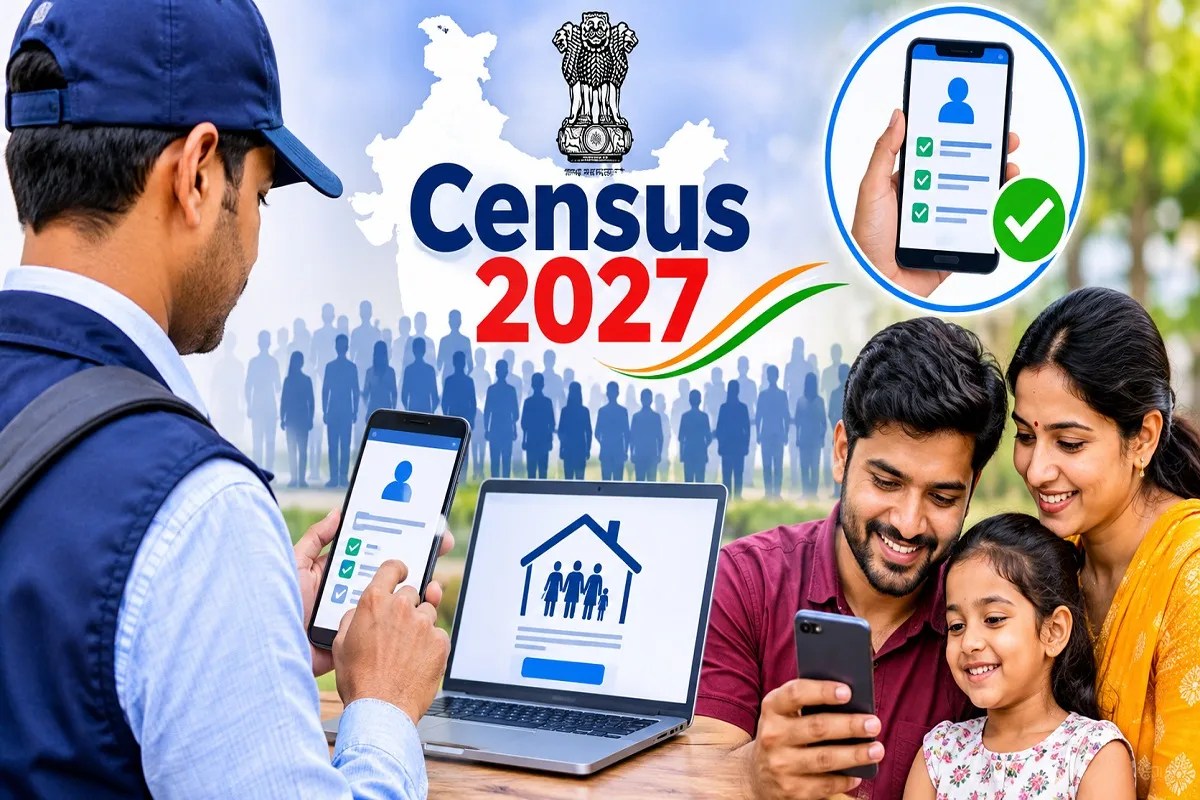
Preparations for Census 2027 gather pace (Photo source: AI)
Raipur: The country's census is now set to move ahead with the help of digital technology, in line with changing times. Data for Census 2027 will be collected through digital means. Under the new system, enumerators will collect information on families through a special mobile application on smartphones.
Ordinary citizens will also get the facility to enter their own details through a smartphone and a web portal, known as self-enumeration. Supervisors will then verify these details. To carry out this work in an orderly and error-free manner, a training programme was held at the Red Cross hall on the Raipur Collectorate premises.
Separate Training for Rural and Urban Officers
Kartikeya Goyal, Director of Census Operations and Civil Registration, was present at the training programme. Kumar Bishwaranjan, Chief Executive Officer of the Zila Panchayat, and officials of the departments concerned also took part. In the four-day training, rural charge officers were trained on the first two days. On the next two days, urban charge officers were briefed on the census process and their responsibilities.
Families Can Also Enter Details From Home
The biggest feature of Census 2027 is the option of self-enumeration along with digital enumeration. Through this, citizens will be able to enter information about their families themselves, using a smartphone or the web portal.
Census Data to Be the Basis for Development Plans
During the second phase of the census, that is, population enumeration, enumerators will collect demographic, socio-cultural and economic details of every individual. Migration and fertility-related aspects will also be included in the data. The importance of these figures will not be limited to knowing the size of the population. In future, they will also play an important role in framing development plans related to education, health, housing, employment and basic facilities.