22 May 2026,
Friday

22 May 2026,
Friday
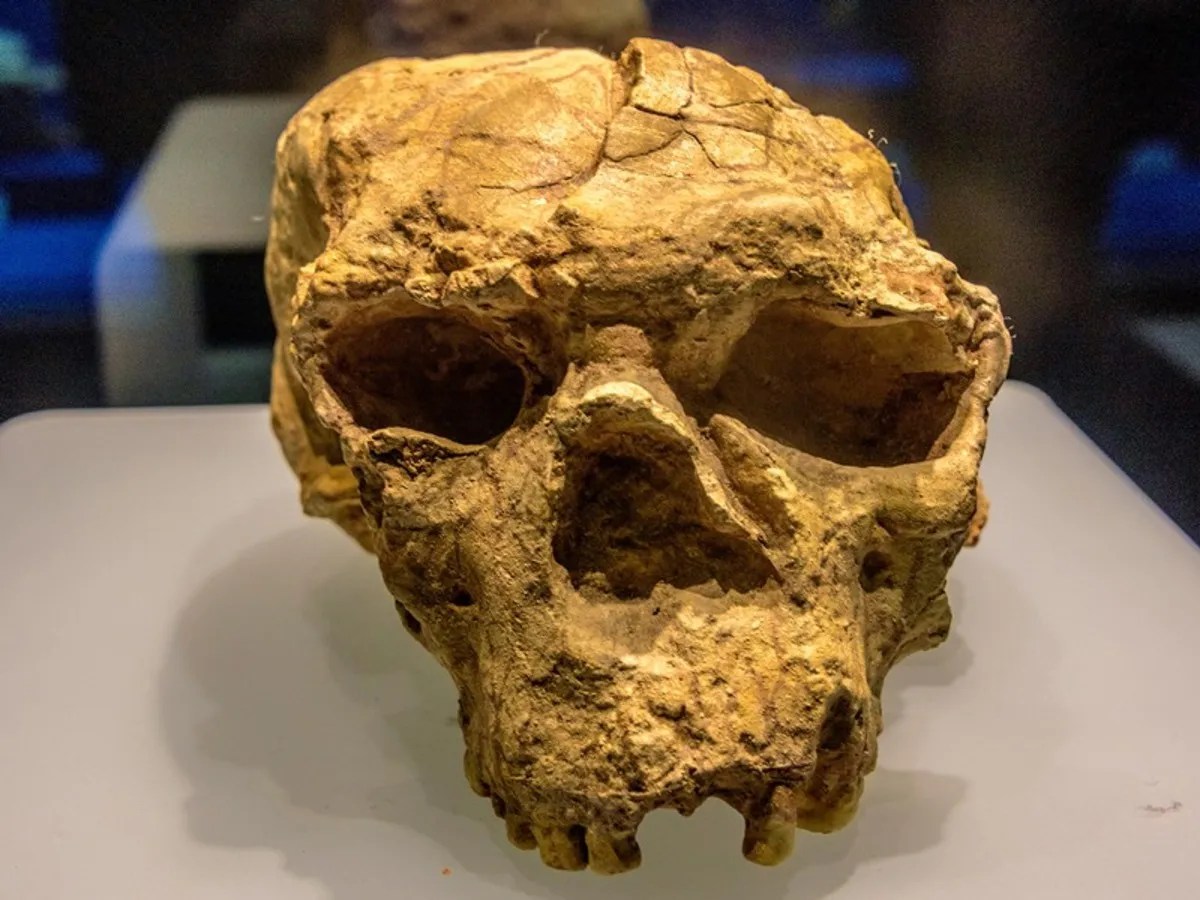
10 lakh years old human skull (Photo - Live Science)
A discovery made decades ago in China's Hubei province has astonished scientists. Researchers have found a 1-million-year-old human skull that is somewhat flattened. A team led by Professor Xiaobiao Feng of China's Shanxi University and paleoanthropologist Chris Stringer of the Natural History Museum, London, used digital reconstruction to determine that this approximately 1-million-year-old human skull belonged to the Denisovan and 'Dragon Man' lineage. This implies that the divergence of the human species is older and more complex than previously thought. This significant revelation has left scientists astounded.
Advanced technology was used to research the better-preserved Yunxian-2 skull, one of two skulls found in the Yunxian area in 1989-90. It was initially considered Homo erectus, but new research indicates its features align with 'Dragon Man' (Homo longi) and Denisovans.
The research suggests that the common ancestor of Denisovans and modern humans existed around 1.32 million years ago, with Neanderthals diverging even earlier. This discovery has not only surprised scientists but also revealed new insights into human existence.
This research challenges the traditional belief that the divergence between humans, Neanderthals, and Denisovans occurred only 500,000 to 700,000 years ago. Scientists state that if this conclusion is accurate, the timeline of human origins would be pushed back by approximately 400,000 years. Researchers believe that the common ancestor of these three groups was likely Homo erectus. This research has been published in the journal Science and is considered a major advancement in solving the puzzles of the middle period of human evolution.
Big News
View AllWorld
Trending