14 February 2026,
Saturday

14 February 2026,
Saturday
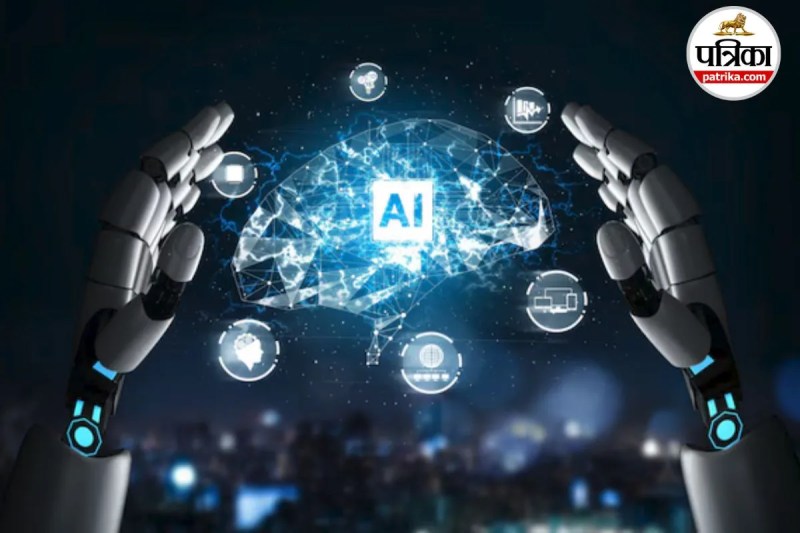
Artificial Intelligence(Image-Freepik)
AI is now predicting health risks, especially the danger of heart attack, stroke, and death. In research by Cedars-Sinai and Johns Hopkins, AI predicted heart attack risk 5-10 years in advance with 85-95% accuracy. A Johns Hopkins model reported a 93% accurate risk of sudden death in hypertrophic cardiomyopathy. Globally, the trend of AI in healthcare is rapidly increasing. The market is expected to exceed $21.66 billion in 2025. In America, 66% of physicians are using AI.
AI predicts risks in diseases like heart disease, cancer, stroke, and diabetes. Although the accuracy is high, concerns about mental stress, incorrect predictions, and privacy persist among people. Experts say that predictions make people fearful while they are alive. Caution is necessary regarding ethical issues like bias and over-reliance. In the future, AI will strengthen preventive care, but human oversight is also essential.
In research by Cedars-Sinai, AI accurately predicted the risk of heart attack within 5 years by analysing plaque from CTA images, which is better than traditional methods. It was successful in tests on thousands of patients. Secondly, Johns Hopkins' model accurately predicted the risk of sudden cardiac death by looking at scarring from MRI in hypertrophic cardiomyopathy with 89-93% accuracy, whereas doctors' guidelines are only 50% accurate. This clearly shows that AI can catch hidden patterns and help save lives.
AI's prediction accuracy is up to 85-95%, such as 0.85-0.91 AUC in heart attacks. It is effective in heart disease, stroke, heart failure, cancer, and diabetes. It predicts risk by looking at plaque or scarring from imaging. Some models predict cardiac events up to 10 years in advance, but 66% of physicians are using it in diagnostics. However, accuracy depends on data quality.
AI predictions increase mental stress; people fear death predictions. Incorrect predictions can lead to unnecessary treatment or ignorance. Ethical issues like privacy breaches and bias can lead to unequal care. Over-reliance can reduce doctors' skills. The patient-doctor relationship is affected, and trust decreases. Studies warn that predictions without certainty are not actionable. Overall, there is a risk of fear from false positives and negligence from false negatives.
AI health predictions can be misused by insurance companies to increase risk-based premiums. Employers can discriminate in job decisions. The government can increase surveillance. Data poisoning can lead to incorrect predictions or misinformation. In some cases, predictions might be ignored, leading to negligence. Experts warn that without regulation, misuse will increase inequality and pose privacy risks.
Big News
View AllWorld
Trending