22 April 2026,
Wednesday


22 April 2026,
Wednesday
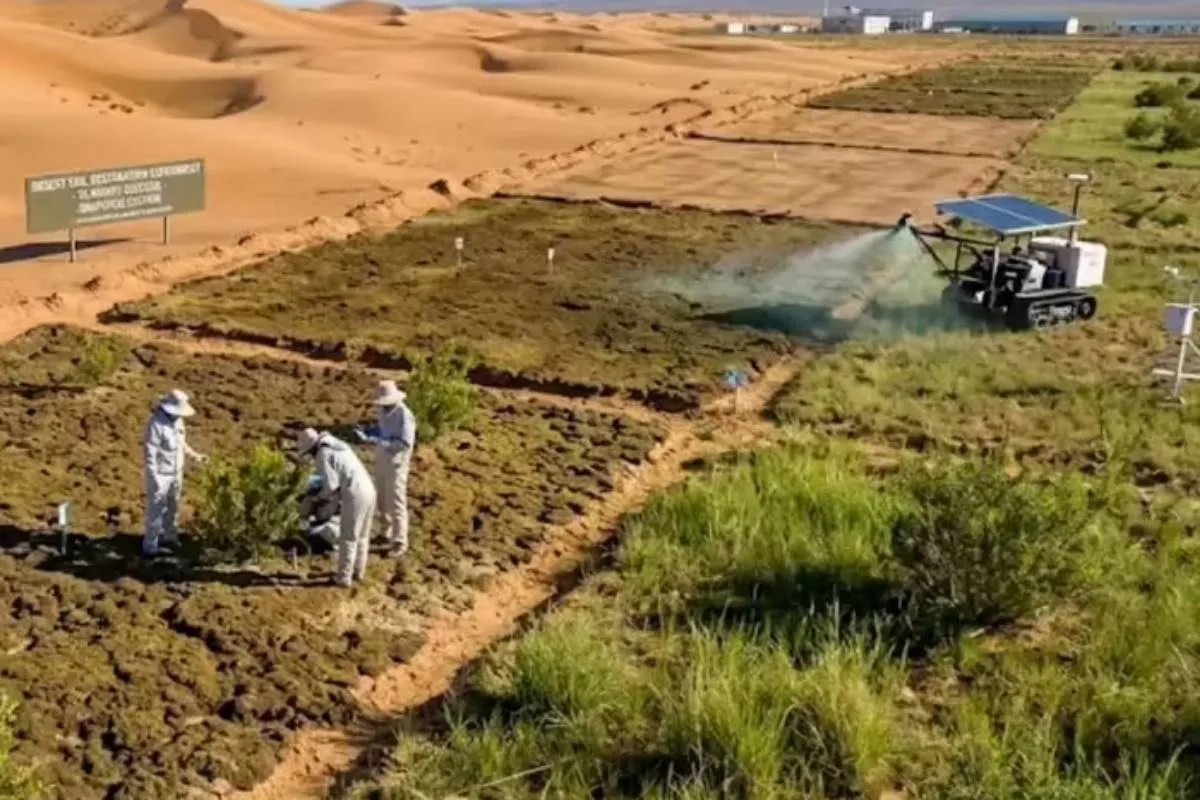
Chinese scientists have achieved a breakthrough in converting barren desert sands into fertile land. Researchers at the Shapotou Desert Experimental Research Station have developed a pioneering technique that can transform desolate dunes into cultivable soil in just 10 months.
The process utilises microorganisms known as cyanobacteria. These are photosynthetic organisms that generate energy from sunlight and are capable of surviving in extremely hot and arid environments. Soil created through this method increases organic carbon 3.2 times faster than naturally occurring soil, while nitrogen levels can surge by approximately 15 times.
When these microorganisms are spread across the sand, they secrete sugar-based sticky substances. This material acts as a biological glue, binding individual sand particles together to create a strong, stable surface.
This process forms a layer of organic soil on the desert surface known as a 'biological soil crust'. This crust prevents the sand from shifting, reduces wind erosion, and helps the ground retain essential moisture.
According to the scientists, this technology drastically reduces the time required for natural soil formation. It also accelerates the accumulation of essential nutrients such as nitrogen and phosphorus, which are crucial for plant growth.
With this new system, shrubs, grasses, and other vegetation can be easily grown on desert land. This makes it possible to bring greenery to regions where farming or planting was previously considered impossible.
The researchers noted that as the ground stabilises, other organisms such as lichens, mosses, and small insects begin to thrive, allowing a complete ecosystem to evolve gradually.
Traditional methods of desert afforestation are often labour-intensive, time-consuming, and expensive. In contrast, this new technique is low-cost, eco-friendly, and requires minimal maintenance, offering a sustainable solution to global desertification.
Big News
View AllWorld
Trending