5 September 2026,
Saturday

5 September 2026,
Saturday
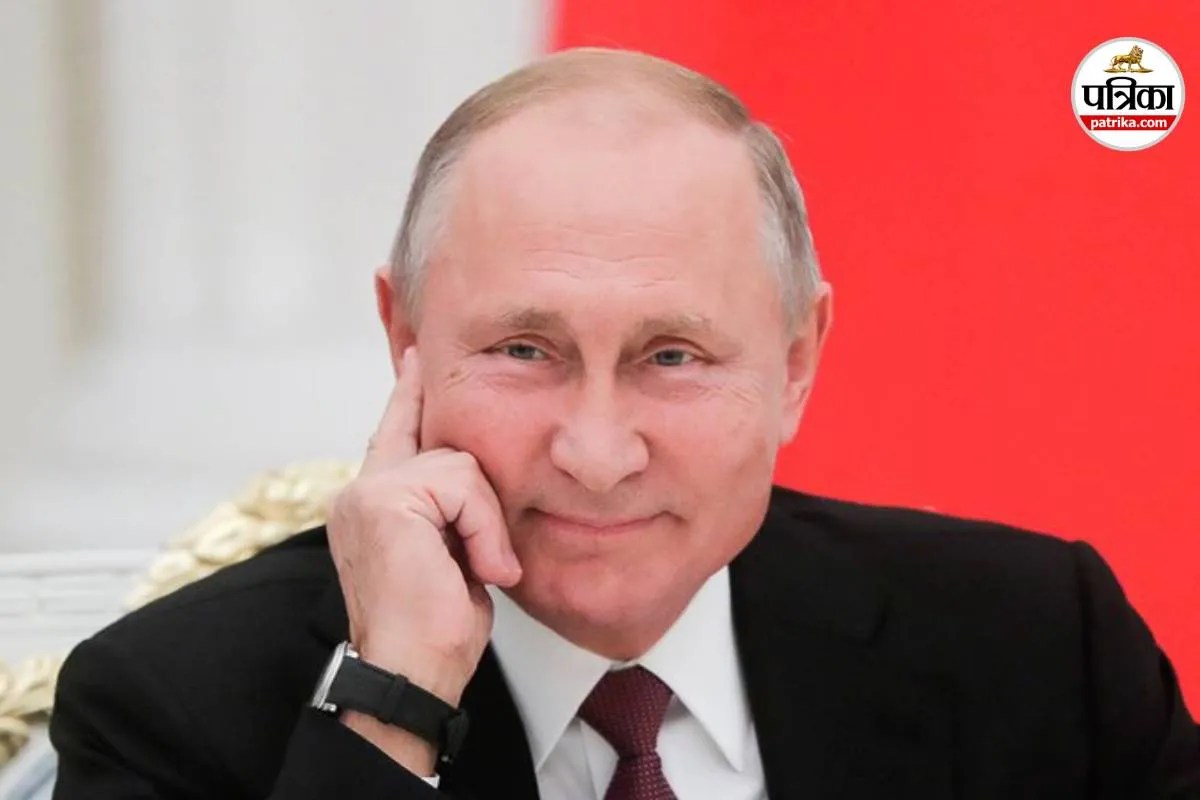
Russian President Vladimir Putin (Image: X Handle Joni Askola.)
Russian President Vladimir Putin has presented a new approach to the Ukraine war to Europe, moving beyond conventional warfare. This new strategy, termed 'Hybrid Warfare', involves disrupting Europe through digital and drone attacks without direct gunfire. In the past week, drone attacks on several European airports have caused significant disruption, forcing Europe to accept such incidents as its new normal. Danish Prime Minister Mette Frederiksen has acknowledged that there is no clear evidence behind these attacks and she is not directly blaming Russia, but the threat to Europe is substantial. Identifying perpetrators in such attacks is difficult as they are carried out covertly and stealthily. This is why these attacks have created an atmosphere of uncertainty and confusion regarding security in Europe.
The aim of these Russian drone and cyber attacks is not merely to cause damage, but also to erode public trust in their leaders and security agencies. Drone activity and airspace violations in European countries like Poland and Estonia clearly indicate that Russia is escalating its aggression. Meanwhile, hacking attacks have created instability at numerous European airports and other locations.
Danish officials have so far been unable to ascertain the true culprits behind these attacks. Frederiksen stated that making hasty wrong decisions and delaying correct actions both pose risks. Denmark has provided F16 fighter jets to Ukraine and is simultaneously preparing long-range missiles for its national defence.
Western countries are continuously grappling with the impact and accountability of this hybrid warfare. If Russia is held responsible, it could escalate tensions, and if responsibility is not taken, security threats could increase further. Countries like the UK and Poland have initiated strict actions against pro-Russian criminals and agents.
Such attacks are proving costly for Europe. Significant expenditure on large weapons and missiles is required to counter drone attacks, which is not always feasible. This situation has become a challenge for NATO and Europe's security apparatus.
Of greater concern is the possibility that several Russian agents may infiltrate NATO countries and harm civilians. Additionally, sometimes incorrect accusations are made against Russia, further complicating the situation.
Although Putin is hesitant to take risks with major actions, his aggression has increased following his recent meeting with Chinese President Xi Jinping. In the meantime, ordinary European citizens are facing inconveniences such as airport delays, rising gas prices, and cyber attacks, all of which are part of Putin's strategy.
Nevertheless, Europe will now need to spend more and prepare extensively to strengthen its security, as this hybrid warfare is evolving into a protracted conflict. This may be an advantage for Putin, but it also presents numerous new threats to Europe.