30 May 2026,
Saturday

30 May 2026,
Saturday
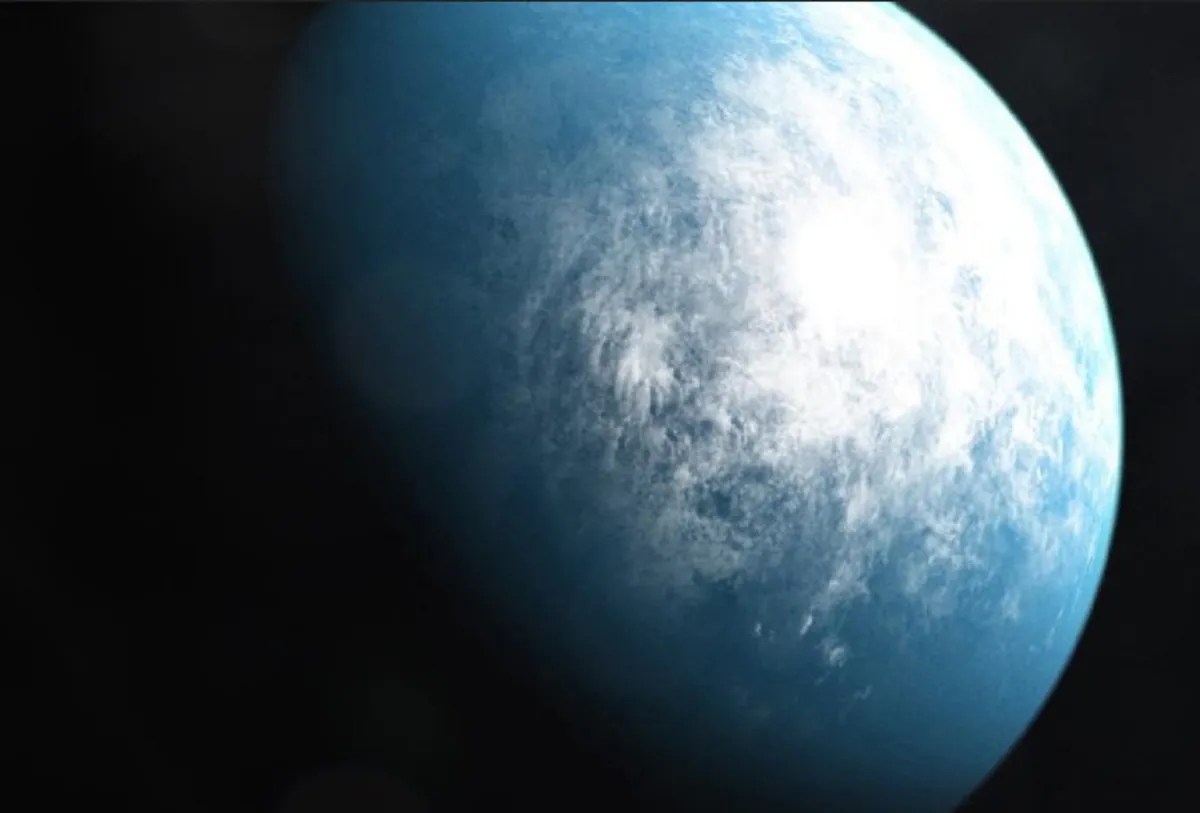
Planet found 620 light years away from Earth (Representational Photo)
Scientists have recently discovered a planet located 620 light-years away in the Chameleon constellation. This discovery has astonished scientists. The planet has been named 'Cha 1107-7626'. The remarkable aspect is that it does not orbit a star and wanders alone in space. This research was conducted by a team from the Palermo Observatory of Italy's National Institute for Astrophysics (INAF) and scientists from the University of St Andrews in Scotland. It was found that this planet is consuming gas and dust at an unprecedented rate, behaving more like a star than a planet.
'Cha 1107-7626' is said to be 5–10 times heavier than Jupiter and is 1 to 2 million years old. It was observed using the European Southern Observatory's 'Very Large Telescope' and NASA's James Webb Telescope. Its normal growth rate, which was observed in April-May, suddenly increased eightfold between June and August, with the planet consuming 6.6 billion tons of gas and dust every second. This is reported to be the fastest growth rate recorded for any planet to date.
In their research, scientists found that the chemistry of the gas and dust disk surrounding the planet has also changed. Water vapour appeared there for the first time. Typically, such activity is observed during the formation of stars, but this is the first time it has been observed with a planet. Scientists believe that the reason for its growth is powerful magnetic activity, which was previously only observed in stars.
Scientists believe that planets like 'Cha 1107-7626' are perhaps born from clouds of gas and dust, similar to stars. This planet had previously shown rapid growth in 2016. Scientists now want to understand how long such growth phases last and how often they repeat. Future instruments like the 'Extremely Large Telescope' and the 'Rubin Observatory' will help in understanding these mysterious planets more closely.
Big News
View AllWorld
Trending