21 September 2026,
Monday

21 September 2026,
Monday
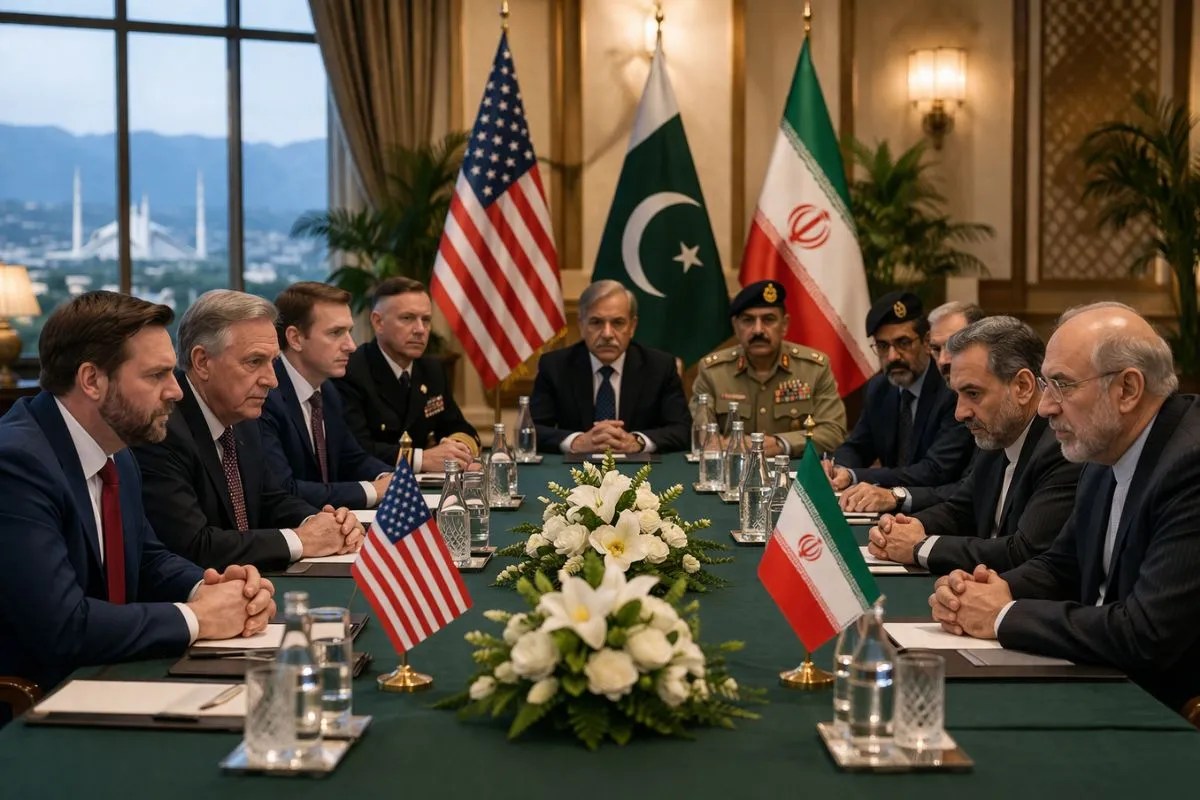
US-Iran Peace Talks: Pakistan's capital, Islamabad, is set to witness a significant diplomatic development today. On Saturday, talks between the United States and Iran, which have captured global attention, are scheduled to take place here. The crucial question remains: will these discussions lead to an end of the conflict, or will the situation escalate further? The path to these talks has not been smooth. Iran had initially refused to participate, citing Israel's attacks on Lebanon. However, circumstances changed, and Tehran eventually agreed to the dialogue. Representatives from both countries have now arrived in Islamabad.
Former US President Donald Trump has already conveyed his firm intentions ahead of the talks. He stated that the Strait of Hormuz will be reopened soon, whether Iran cooperates or not. Furthermore, he issued a warning that the US might resort to military action again if no agreement is reached.
In this entire negotiation process, Pakistan is not just acting as a host but also as a mediator. From Pakistan's side, Prime Minister Shehbaz Sharif, Foreign Minister Ishaq Dar, Army Chief Asim Munir, and National Security Advisor Mohammad Asim Malik are involved in this process.
The American delegation is being led by Vice President J.D. Vance. He will be accompanied by Trump's special envoy Steve Witkoff, Trump's son-in-law Jared Kushner, and the Commander of US Central Command, Admiral Brad Cooper. On the Iranian side, Parliament Speaker Mohammad Bagher Ghalibaf, Deputy Foreign Minister Majid Takht Ravanchi, and senior officials from the Security Council will be participating. The Iranian delegation engaging in talks with the US in Islamabad comprises over 80 individuals, with the delegation being headed by the Speaker of the Iranian Parliament, Mohammad Bagher Ghalibaf.
These talks will be conducted in a somewhat unconventional manner. Representatives from both countries will be staying at the same hotel—Islamabad's Serena Hotel—but will not be engaging in direct face-to-face discussions. Instead, a method of "proximity talks" will be employed. This means both teams will remain in separate rooms, and Pakistani officials will relay messages from one room to another. This approach is typically adopted when both parties wish to avoid direct dialogue but still deem it necessary to maintain communication.