7 October 2026,
Wednesday

7 October 2026,
Wednesday
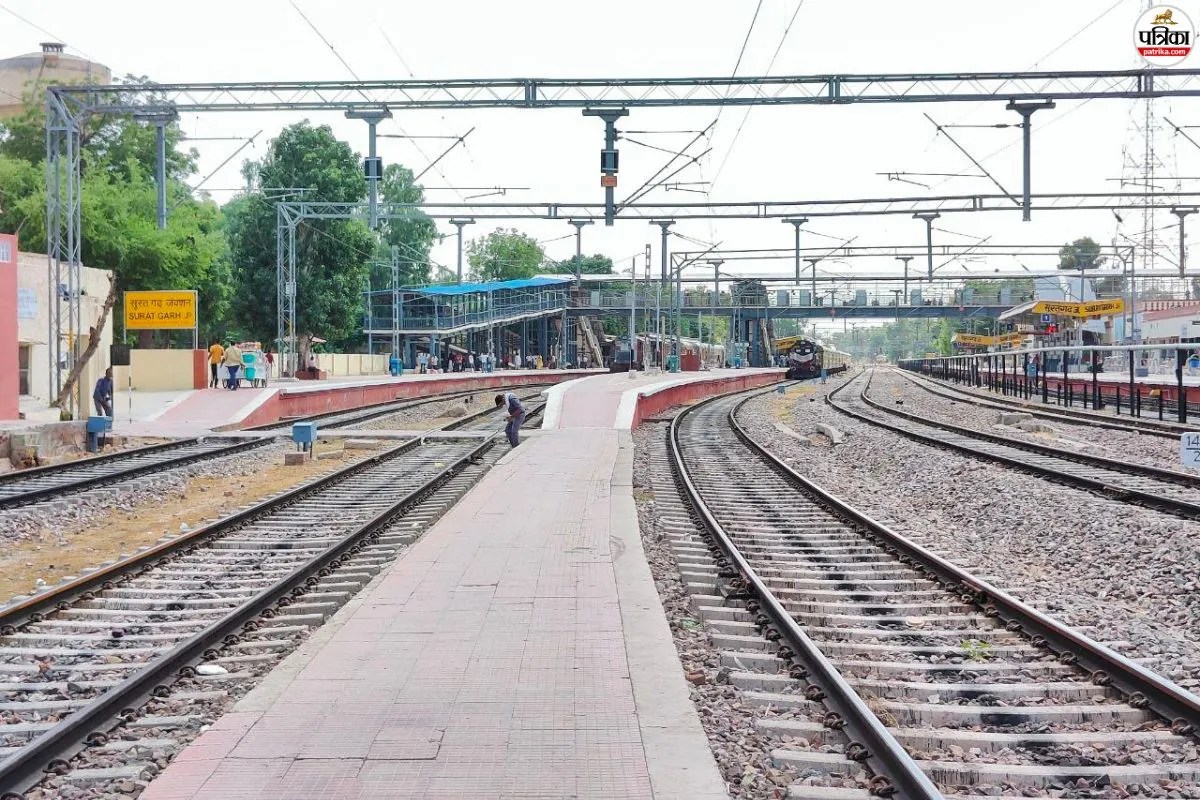
Representative image: Patrika
The Bathinda-Lalgarh rail doubling project, one of the largest undertakings of North Western Railway, is now set to move forward on the ground. Far more than a simple second-line-laying exercise, the project is expected to significantly expand rail network capacity across Rajasthan, Punjab and Haryana. Under the plan, a second rail line will be laid along a 320.17-km stretch at a cost of ₹3,435.77 crore, boosting rail operations across six districts and opening new avenues for passenger and freight movement.
Since being granted special rail project status, implementation has picked up pace, with Railways aiming to complete the work within four years. According to Railways' Detailed Project Report (DPR), the line will pass through Bathinda and Sri Muktsar Sahib in Punjab, Sirsa in Haryana, and Hanumangarh, Sri Ganganagar and Bikaner in Rajasthan. A total of 125.5 hectares of land will be acquired for the doubling work.
This rail section connects Rajasthan's agricultural belts with Punjab and Haryana, and the doubling is expected to speed up the movement of agricultural produce, industrial goods and other freight. Coal rake movement for the Suratgarh Super Thermal Power Plant is also expected to improve as a result.
A Key Rail Project
The Bathinda-Lalgarh doubling is among North Western Railway's major doubling projects. Connecting Rajasthan, Punjab and Haryana, it is expected to play a significant role in boosting both passenger services and freight-carrying capacity. The second line will increase operational capacity and allow smoother train movement, said Amit Sudarshan, CPRO, North Western Railway, Jaipur.
Key Benefits
A Major Engineering Undertaking
The project is significant from an engineering standpoint too. Construction will involve 15.38 lakh cubic metres of earthwork and 13.11 lakh cubic metres of blanketing work. As per the DPR, six major and 106 minor bridges will be built over rivers and canals, along with provision for 96 ROBs/LHSs — of which 56 will be newly built, while 40 level crossings will be eliminated.
Construction Work at 33 Stations
The 320.17-km rail section has 33 stations in total, including four junctions, 25 crossing stations and four halt stations. Once the second line is complete, trains on this busy section will no longer need to wait long periods for crossings. On completion, this key rail corridor linking Punjab, Haryana and Rajasthan will become fully double-tracked.