13 October 2026,
Tuesday

13 October 2026,
Tuesday
Image; Patrika
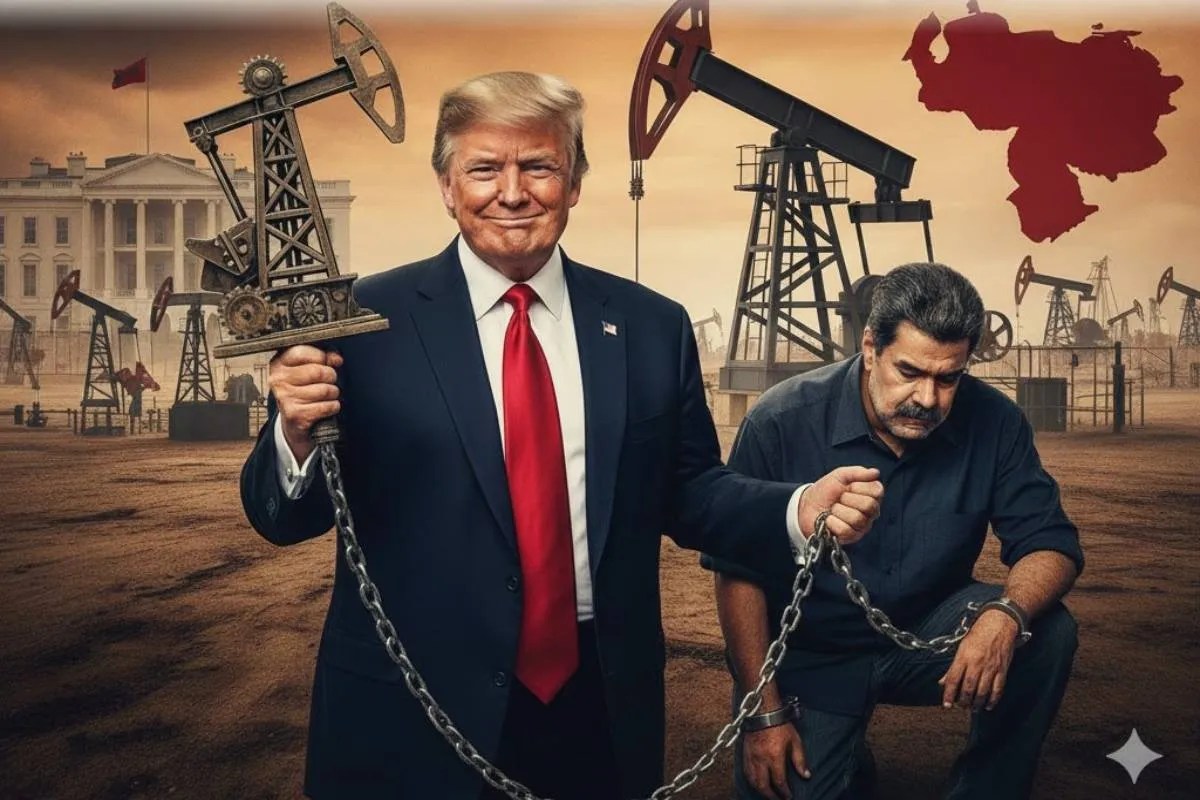
Deepening geopolitical tensions between two major global powers, the United States and Venezuela, have stirred the global oil market. Whenever tensions escalate between these two countries, the first question that arises is whether it will pose a threat to India's 'oil security'. Looking at recent reports and economic data, the picture appears largely in India's favour. Market experts believe that despite the tensions, global crude oil supply is likely to increase. This speculation has led to a softening trend in crude oil prices in the international market. India imports a vast majority of its crude oil needs, making a decline in global prices always a positive sign for India.
It is often assumed that Venezuela is a crucial source of oil for India, but the data tells a different story. Bilateral trade between India and Venezuela is currently around USD 1.9 billion. Of this, India's exports are a mere USD 217 million, while imports stand at USD 1.6 billion.
Looking at trends over the past five years, Indian exports to Venezuela have seen a decline of 8.8% (CAGR). Although imports from Venezuela did increase in FY2025, this is not a 'structural dependency' or an essential reliance. In simple terms, India buys oil from Venezuela because it is cheaper, not because it cannot function without it.
| Rank | Country | Feature / Status | Importance to India |
| 1 | Russia | Largest supplier | Heavy discounts and large volumes |
| 2 | Iraq | Traditional reliable partner | Stable supply and quality |
| 3 | Saudi Arabia | Premium grade oil | Long-term strategic relationship |
| 4 | UAE | Key Gulf ally | Easy logistics and trade |
| 5 | Venezuela | Cheaper 'heavy crude' | Lower per-unit cost (economical) |
Crude oil is the most significant item among goods imported from Venezuela. Venezuela offers oil to India at much more competitive prices than other countries. According to reports, among the countries from which India purchases petroleum, the 'per-unit cost' of oil from Venezuela is significantly lower. This helps India keep its import bill down.
Analysing the current situation, the US-Venezuela tensions do not pose any immediate major threat to India. As global oil supply is expected to remain abundant, there is virtually no chance of a sudden surge in India's oil import bill. India is effectively utilising options like Russia, Iraq, and Saudi Arabia for its energy needs, making the Venezuelan crisis not a significant challenge for India at present.
This report clarifies that India's foreign policy and trade strategies have now matured to a point where tensions with any single country cannot shake India's energy security. Receiving 'cheaper oil' from Venezuela is like a bonus, but it is not India's compulsion. The market's softening also indicates that global investors do not currently view this tension as an oil crisis.
US Sanctions: If the US imposes new stringent sanctions on Venezuela, Indian refineries might have to alter their payment gateways and shipping routes.
Russia's Stance: Since India is currently receiving a large volume of oil from Russia, it will be interesting to see how any disruption in Venezuelan supply is compensated by Russian oil.
However, there is also a 'logistics' aspect to this entire dispute. Venezuelan oil falls under the category of 'heavy crude', which requires special refinery capacity for processing. India's private refineries like Reliance and Nayara are capable of processing this oil. If oil from Venezuela decreases, these refineries will have to make changes to their feedstock, which might slightly affect their margins, but it is unlikely to have a direct impact on the general public. (Input: ANI)